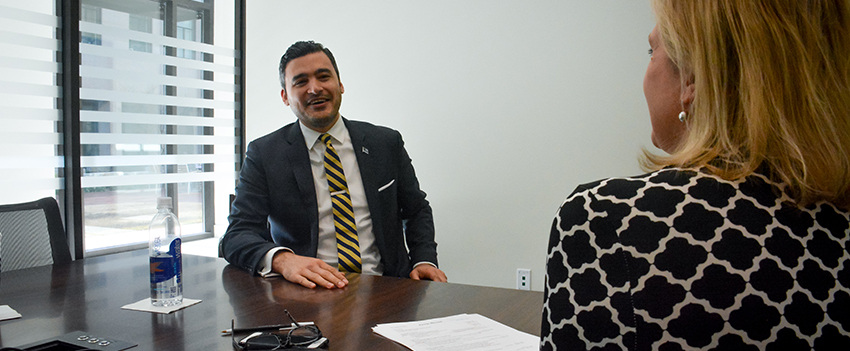
Capstone courses provide intense doctrine and skills-based training and include seasoned attorneys from the community as instructors. The intricately designed cases will test your ability to work together and challenge your problem-solving skills. By the time you're done, you'll be able to confidently apply what you've learned in the professional arena.
Capstone Courses
Students will be divided into two “law firms” and serve as “associates” in the law firms. The assignments will focus on the pretrial aspect of a civil litigation. Students will have an initial client meeting, write a research memo to the client, draft pleadings, draft and argue motions, prepare discovery requests and answers, take depositions, and hire and prepare witnesses for a deposition. In the course of these exercises students will confront problems dealing with choosing the proper parties, identifying the proper jurisdiction for the litigation, settling discovery disputes, and calculating damages.
This course is designed to be a Capstone course for third year (3L) students interested in an in-depth, practical and advanced course in real estate law and real estate finance. Students will be participate in simulated experiences throughout the semester, and will end the semester negotiating a real estate development deal. The course will explore land development, real estate finance, foreclosures and receiverships and the development of real estate projects such as condominium, office and retail facilities. The focus will be on real estate commercial transactions in South Carolina, but will have general applicability to real estate transactions in other jurisdictions, as well as general application to residential real estate transactions.
This course will provide students with practical and substantive knowledge and experience in transactional law using a small business nonprofit or small business for-profit organization model. It will be multidisciplinary and provide students a broad theoretical and practical experience with measurable outcomes and skills, including problem solving, project management, leadership, and teamwork. Students will act as counsel for a group interested in forming either a nonprofit 501(c)(3) organization or a for-profit entity that will own and operate a business. As counsel for the organization, students’ responsibilities will include interviewing a client; reviewing a Retainer Agreement; preparing Articles of Incorporation; preparing Bylaws; preparing IRC Form 1023 (Application for Exemption) or LLC or other business documents; providing Board of Director education and advice at simulated board meetings; and preparing Contracts, Lease Agreements, and/or Sponsorship Agreements. Students may also advise the client and draft documents related to copyright issues, potential mergers, and partnership agreements.
This simulation course is for third-year (3L) students interested in the practice of criminal law. During the semester, students will apply the knowledge and skills learned in prior law school courses by simulating the litigation of a federal criminal case beginning with the investigative and grand jury phases; through charging, pre-trial, and plea proceedings; and ending with sentencing and appeal. Students will: (1) prepare prosecution memoranda and indictments; (2) conduct mock grand jury sessions; (3) prepare or respond to motions to suppress evidence; (4) argue suppression motions; (5) conduct sentencing guideline calculations and prepare sentencing memoranda; and (6) file a notice of appeal. Students will also have an opportunity to observe actual federal court criminal proceedings; and gain practical insight from prosecutors, law enforcement officials, members of the criminal defense bar, and judges, who will serve as guest speakers. Although the course will highlight the role of the federal prosecutor, students will serve as both prosecutors and defense counsel during practical exercises. They will also hear the perspective of criminal defense practitioners through guest lecturers, legal articles and treatises. Thus, the skills developed during this course will easily translate to a state, tribal, or military criminal practice as a prosecutor or defense counsel. Graduation Requirement: This course satisfies the experiential course requirement for graduation. Must earn a grade of C or better, Basis of Grade: Class and outside court event participation and attendance, demonstrated research, writing, and oral advocacy skills. Form of Grade: Letter.