
Autism-related research part of wide-ranging USC focus on neuroscience
The University of South Carolina is focused on the brain. From autism and aphasia to Alzheimer’s and other related dementias, university researchers are working across several academic disciplines to better understand how the brain works and to develop solutions that will improve people’s health.
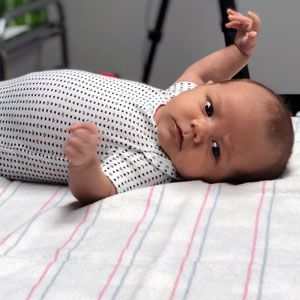
AI and data science: The new frontier of autism research
Researchers at USC combine large datasets and machine learning to break new ground
Analyzing large datasets of heart rhythms and brain wave activity with AI and machine learning, a team of University of South Carolina professors is making progress toward better understanding of autism spectrum disorder and identification of ASD diagnostic biomarkers.
IMB Faculty Dr. Caitlin Hudac named new McCausland Fellow
Congratulations to Dr. Hudac! Dr. Hudac is one of 10 recipients of the USC College of Arts and Sciences most prestigious awards for early career faculty who bring innovation to their research and teaching. Dr. Hudac was recognized in part for her focus on inclusion in neuroscience. This includes her work traveling over 15, 000 miles across the country to improve access to neuroscience research for rare genetic populations (see story on The Transmitter). One leader in her field described Dr. Hudac's work as "exactly the kind of creativity, flexibility, and initiative we need". As a McCausland Fellow, Dr. Hudac indicated using this opportunity to expand her research to include rural areas across the state of South Carolina, as well as expand their research in the area of hyperscanning (simultaneous EEG brain recording during interactions). In addition, Hudac says, "We are looking forward to developing new programs for underrepresented trainees interested in neuroscience."
Learn more about Dr. Hudac's research lab: Brain Research Across Development Lab
Open position: Director of Institute for Mind and Brain
We are currently accepting nominations and applications for the Director of the IMB. We seek a nationally recognized scholar and proven leader who is excited to bring their vision to the IMB for its next phase of growth.
If you are interested in learning more about the position or have a nomination in mind, please reach out to Professor Chris Rorden. The Director faculty position will be based in the Department of Psychology.
Full details and link to apply
Growth in brain health sciences at USC
USC is positioned for tremendous growth in the area of health sciences. New plans to expand the McCausland Center for Brain Imaging in a central Columbia, SC location in the BullStreet District. As Dr. Julius Fridriksson (Vice President for Research at USC) said, "The new health sciences campus will also provide a cutting-edge setting where our faculty can unleash their drive for innovation in the health sector, discovering new lifesaving and health-promoting technologies through increased research and development.”
The Institute welcomes Dr. Fu as an affiliate
Dr. Fu is an Assistant Professor in the Department of Psychology. Her research in Developmental Cognitive Neuroscience implements a multi-method approach to study the impact of early vulnerability on the development of social cognitive functions, and how these functions influence the risk of developing socioemotional problems. She focuses on examining and characterizing the neurocognitive and behavioral processes that lead to either adaptive or maladaptive developmental pathways for at-risk children. Her research cuts across Developmental Psychology, Neuroscience, and Developmental Research Methodology, and the study findings have important implications for identifying early risk markers.
Misophonia research
Drs. Svetlana Shinkareva and Douglas Wedell received funding from the REAM foundation to investigate whether and how visual signals and mental imagery play a role in affective reactions to triggers in individuals suffering from misophonia, a condition characterized by disproportional adverse responses to certain sounds.
IMB Faculty Dr. Chris Rorden named 2022 Breakthrough Leader
Chris Rorden has made his mark with the open-source software he has developed to assist in brain visualization, image processing and statistics. “My seminal image processing work has allowed tools designed to look at the healthy brain to be translated to clinical applications. This has provided new insights on stroke recovery and helped guide brain stimulation,” Rorden says. “My visualization software remains the top download from our field's Neuroimaging Tools and Resources Collaboratory.”
SCOPE (South CarOlina Psycholinguistic MEtabase)
The IMB announces a major resource for the psycholinguistic and neurolinguistic research communities. SCOPE (South CarOlina Psycholinguistic MEtabase) is a curated metabase of existing lexical psycholinguistic word properties. It contains over 100,000 words, 80,000 nonwords and more than 210 variables measuring a wide variety of lexical properties, making it the largest database of psycholinguistic word properties. The web interface (https://go.sc.edu/scope) allows search and retrieval of words, nonwords, and their properties. A comparison of psycholinguistic properties and their relationship to behavioral response measures is described in the most comprehensive study of this type to date (Gao, C., Shinkareva, S.V. & Desai, R.H. SCOPE: The South Carolina psycholinguistic metabase. Behavior Research Methods, 2022).
The Institute welcomes Dr. Christian O'Reilly as an affiliate
Dr. O’Reilly is an Assistant Professor in the Department of Compute Science and Engineering. His main research interests are related to better understanding the brain across spatial and temporal scales in order to address complex neurodevelopmental issues such as autism and other neurodevelopmental disorders.
The Institute welcomes Dr. Amit Sheth as an affiliate
Dr. Sheth is a Professor in the Department of Compute Science and Engineering. His current research interests include Artificial Intelligence, Semantic Web, Physical/IoT-Cyber-Social-Clinical Big Data, Augmented Personalized Health, AI and Big Data applications.
The Institute welcomes Dr. Yuan Wang as an affiliate
Dr. Wang is an Assistant Professor in the Department of Epidemiology and Biostatistics. Her research is focused on mathematical and statistical modeling of data from electroencephalography (EEG), functional magnetic resonance imaging (fMRI) and diffusion tensor imaging (DTI) of clinical groups with brain disorders such as epilepsy.
The Institute welcomes Dr. Meisam Arjmandi as an affiliate
Dr. Arjmandi is an Assistant Professor in the Department of Communication Sciences and Disorders. His research combines behavioral, computational, and neuroimaging techniques to systematically investigate the mechanisms and factors influencing the auditory, speech, and language development in individuals with typical, impaired, and electric hearing.
Congratulations to undergraduate award recipients and undergraduate students who presented their research at Discover UofSC.
Matthew Caputo
Discover UofSC 2021 undergraduate student award.
Eye gaze and heart rate deceleration as indices of attention in autism.
Mentors: Dr. Abigail Hogan, Ms. Kayla Smith
Abigail Caughman
Honors Thesis: Working with Autistic University Students: What to do Differently.
Mentor: Dr. Jessica Bradshaw
Alana Dea, Magellan Scholar (2021)
How does bimanual manipulation at 6 months of age predict motor scores at 9 and 12
months of age?
Mentor: Dr. Jessica Bradshaw
Cameryn Freglette
Sounds to chew on: a stimulus development study.
Mentors: Dr. Svetlana Shinkareva, Dr. Doug Wedell, Ms. Sewon Oh
Erica Henninger
Discover UofSC 2021 undergraduate student award.
ASD Diagnostic Disparities between Males and Females.
Mentors: Dr. Jane Roberts, Ms. Erin Hunt, Ms. Kayla Smith
Benjamin Leslie
The Roger Black award in psychological research and Discover UofSC 2021 undergraduate student award.
Ratings of affective narrative.
Mentors: Dr. Svetlana Shinkareva, Ms. Sewon Oh
Natalie Long, Magellan Scholar (2021)
Perception of Emotion Authenticity in the context of COVID-19.
Mentors: Dr. Svetlana Shinkareva, Ms. Sewon Oh
Madison McCarty
Discover UofSC 2021 undergraduate student award.
Differences in Symptom Presentation of Anxiety Disorders in Children with Autism Spectrum
Disorder, Younger Siblings of Children with Autism Spectrum Disorder, and Typically
Developing Children.
Mentors: Drs. Jane Roberts, Dr. Abigail Hogan, Ms. Ramsey Coyle
Felicia McGill
Discover UofSC 2021 undergraduate student award for Graduation with Leadership Distinction
in Research.
Relationship Between Social Motivation and Autism Symptom Severity in Autistic Children.
Mentors: Drs. Jane Roberts, Abigail Hogan, Ms. Kayla Smith
Quinlan Mewborne, Magellan Scholar (2020)
Honors Thesis: EEG correlates of consciousness.
Mentor: Dr. Jessica Green, Magellan Faculty Fellow.
Alekhya Mitta
Discover UofSC 2021 undergraduate student award.
Predictors of Comorbid Anxiety in Children Diagnosed With Fragile X Syndrome.
Mentor: Dr. Abigail Hogan
Isabelle Robinson, Malorie Webb
Discover UofSC 2021 undergraduate student award.
Syndrome-Specific Attention Profiles in Infants with a Neurodevelopmental Disorder.
Mentors: Drs. Elizabeth Will, Jane Roberts
Layne Scopano
Science Undergraduate Research Fellowship (SURF)
Early Identification of Language Delays through Analysis of Neurobehavior
Mentor: Dr. Jessica Bradshaw
Mansi Verma
Discover UofSC 2021 undergraduate student award for graduation with leadership distinction
in research.
Decoy effects in Choice under cognitive load.
Mentors: Dr. Doug Wedell, Mr. William Hayes
Vincent Ylagan
Science Undergraduate Research Fellowship (SURF)
The Relationship Between Infant Behavioral Inhibition, Respiratory Sinus Arrhythmia,
and Parent Social Anxiety.
Mentor: Dr. Jessica Bradshaw
Dabriel Zimmerman, Magellan Scholar (2021)
Honors Thesis: Evaluating the Underlying Structure of the Default Mode Network in Adolescents.
Mentor: Dr. John Richards
The Institute welcomes Dr. Jessica Bradshaw as an affiliate
Dr. Bradshaw is a new Assistant Professor in the Psychology Department whose research aims to identify early neurobehavioral markers linked to autism spectrum disorder.
The Institute welcomes Dr. Jessica Bradshaw as an affiliate. Dr. Bradshaw is a new Assistant Professor in the Psychology Department whose research aims to identify early neurobehavioral markers linked to autism spectrum disorder.
Research study linking comprehension and action systems
Researchers determine "comprehension" and "action" systems of the brain may be linked.
High-Density EEG Lab News
We regularly post items of interest on the HD-EEG lab www site. Please visit http://hdeegerp.psych.sc.edu/ to see the latest.
$5M External Funding Mark for HD-EEG Lab
We have over $5 million in grant funds for work directly or indirectly supporting
work in the EEG lab. They include:
National Institutes of Health, National Institute of Mental Health, “Emergence and
stability of autism in FragileX Syncrome”, R01 grant, , 2011 through 2016, $1,934,000.
PI: Jane Roberts.
National Institutes of Health, National Institute of Child Health and Human Development, "Development of sustained attention in infants". March, 2012 through February, 2017, $2,850,022. PI:John E. Richards
ASPIRE-III Award, Office of Research, University of South Carolina, "MRI Simulator Shared Laboratory", 2012-201, $32,990. PI's: Chris Rorden and John E. Richards
Institute for Visiting Scholars, Office of the Provost, University of South Carolina, "Visit of Joseph McCleery for work in the developmental cognitive neuroscience of neurodevelopmental disorders." 2013-2014 $25,000. PI's: John E. Richards and Jane Roberts
National Institutes of Health, “Cortical Areas Involved in Face Processing in Infants at Low- and High-Risk for Autism Spectrum Disorders”, F32 Postdoctoral National Research Service Award, University of South Carolina. September, 2013 through August, 2015, $103,228. PI: Nicki Zieber
University College London, “Visual, neural and behavioral correlates of school-age
children with visual impairment”, Bogue Research Fellowship, University College London,
January 24, 2014 through February 15, 2014. £2419. PI: Johannes Bathelt
National Institutes of Health, "Word learning in reading and language impairment subgroups",
R21 grant, 2013 through 2016, $435,744. PI: Suzanne Adlof
ASPIRE-I Award, Office of Research, University of South Carolina, "Individual differences in reading and attention skills", May, 2014 through September, 2015, $15,000. PI: Jessica Green.
Total: $5,400,054
Jessica Green was awarded an ASPIRE 1
Jessica Green received an ASPIRE grant to do work in the EEG lab. It was $15k (from 05/16/14-09/15/15) and the title is “Individual differences in reading and attention skills”. The project examines how variation in top-down attentional control is related to individual differences in reading skills, particularly looking at how activity of the fronto-parietal control network and anticipatory sensory activity varies with reading performance.
Provost's Visiting Scholarship
Institute Affiliate Dr. John Richards has been awarded a Provost’s Visiting Scholarship grant to bring Dr. Kim Cornish from Monash to the Institute for an extended visit in Fall, 2013, and Spring, 2014. Dr. Monash is an expert in typical and atypical social-emotional, social-communicative, and language development, and will collaborate on research in Autism and Fragile-X Syndrome. She visited the IMB in October, 2013, and again in April, 2014.
ERP Mini-Bootcamp A Great Success
The ERP Mini-Bootcamp, conducted by Steve Luck and hosted by the Institute for Mind and Brain, has now finished. By all accounts it was a great success. Many members of the Institute were among the 70 people who participated in the three-day event. Roughly half of the attendees came from outside universities around the US and the world. A buffet reception held at the Institute provided the opportunity to highlight our new labs and facilities and to continue workshop discussions.
Marc Berman named APS Rising Star
Institute for Mind and Brain faculty affiliate and assistant professor Marc Berman has been named a Rising Star by the Association for Psychological Science. APS identifies rising stars as “young luminaries poised to revolutionize the field”.