
50 Careers for 50 Years
Fifty public health alumni reflect on their educational journeys and the impacts they’ve made across communities, countries, and the world.
December 3, 2025 | Erin Bluvas, bluvase@sc.edu
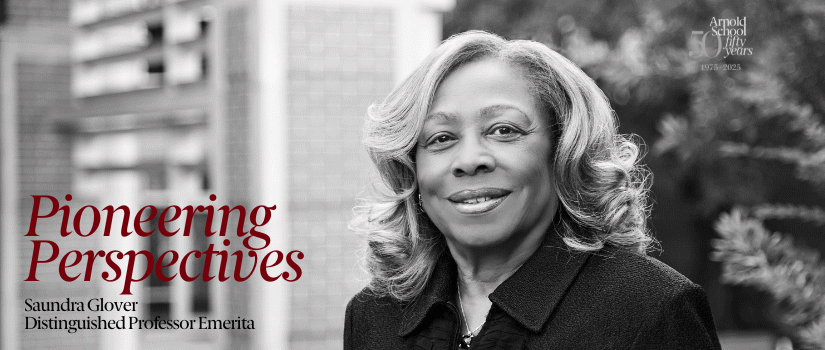
Saundra Glover was already on the path to a career in academia when she was first introduced to USC’s School of Public Health (renamed for Norman J. Arnold in 2000). It was 1991, and she was just finishing up her second degree from the School of Business (later named for Darla Moore) – a Ph.D. that followed the MBA she had completed in 1984.
As her graduation approached, Glover had begun looking for a tenure-track position where she could teach and conduct research. Her advisor told her about an opening in the Arnold School where the health management program (now known as the Department of Health Services Policy and Management (HSPM)) needed someone to teach business courses for students in the Master of Health Administration program.
“The position sounded promising, and I vividly remember meeting with three of the faculty members – the chair, Mike Samuels, Suzan Boyd, and Sam Baker – for lunch at McCutchen House to discuss the role,” says Glover, who soon joined the five or so HSPM faculty as an assistant professor. Back then, the business school was located in the Close Building and the Arnold School was in the old Health Sciences Building. “I used to joke that I just walked across the Horseshoe, but truly, from the moment I came through that door, it was like family. We were brothers and sisters, and the students were our children.”
Glover’s career began with teaching various courses like finance and health law and eventually expanded to include her specialty area, organizational behavior. It was simply a manner of tailoring her extensive business background to the specific practice of managing hospitals, physician practices, and other types of health care organizations.
“Health administration positions all require the same level of acumen and business skills, and our students needed to graduate ready to take on those roles,” Glover says.

In parallel with preparing students for their health careers, Glover had the opportunity and obligation to find her own research niche in the field. Her doctoral work had focused on gender differences as well as ethical decision making across different organizations. Wrestling with how to narrow down the options before her, she explored a diverse array of research areas before she came upon disparities – a theme that would recur and intersect with other topics throughout her career.
Glover began her research program by looking at disparities-related issues within the health care industry. Next she examined the delivery of services – first in South Carolina and then in the surrounding states – in terms of rurality, gender, race, ethnicity, mental health, HIV/AIDS, cancers, and other illnesses.
“Those were the areas that piqued my interest, and much of it had to do with my own personal experiences,” Glover says.
Her family’s health challenges had led to questions for Glover. When her father was diagnosed with prostate cancer and later died from a stroke and when her sister passed away from breast cancer at age 31, she asked how people’s communities, livelihoods, and other lifestyle factors play a role in their illnesses, diagnoses, treatment, and mortality.
Glover’s early disparities work was done in collaboration with the school’s Rural Health Research Center, which was initially led by Samuels and Jan Probst. Glover served as associate director for the Center alongside Probst for many years.
Soon, the funding began rolling in from federal agencies like the National Institutes of Health and the Health Resources and Services Administration (HRSA). These grants enabled Glover to research why Historically Black Colleges and Universities (HBCUs) were located in areas with the some of the highest rates of disparities.
This work coincided with Harris Pastides’ arrival at the Arnold School as dean – a time of rapid growth in its size, funding and reputation. With overlapping interests in issues related to justice, Glover and Pastides submitted a proposal to the Kellogg Foundation to partner with SC-based HBCUs to see how they could collaboratively prepare health care professionals to address various challenges facing local communities.
“I can remember when we were trying to get the full proposal out the door and postmarked, so we were in the old building making copies on a Saturday,” Glover says. “In walks Dean Pastides to help make it happen.”
Glover and Pastides were awarded another joint grant that same year (2003) from HRSA, which together, along with other sources like the Kellogg Foundation, helped found the Institute for Partnerships to Eliminate Health Disparities. The Institute, which Glover directed for many years, took a lead role in research, education, training, and community engagement efforts to eliminate health disparities at the local, state, regional, and national levels. It also established the prestigious James E. Clyburn Health Equity Lecture, which is now approaching its 17th year.
The funding continued to flow over the years, with Glover receiving repeated awards from federal agencies and the Kellogg Foundation. She even led a multi-year project funded by the U.S. Department of Defense to address health disparities in the military.
“We were addressing issues that were very relevant and significant at the time and are still important today,” she says. “We identified the needs in South Carolina and southeast and then developed research projects to propose to grant-funding entities.”
Much of that work deepened and extended the Arnold School’s partnerships with HBCUs, and all of it involved students. What started as a small family grew into a much larger one as the grants helped the department develop its graduate programs and provide funding to support students.
“Students were always at the forefront, and our goal was to help them carve their paths forward so they could become faculty members and professionals who continue this work,” Glover says. “We were also looking for how we could develop, nurture, and provide the best, most enriching experience for students to help them make their own impact on the communities we served.”
Glover retired in 2016, but she continues to see the fruits of her past efforts – watching her former students rise the academic ranks to become full professors, transform into thought leaders who influence policy and serve on impactful committees, and preparing the next generation to carry the work forward.
Over the years, the size of the department – in faculty and staff, student enrollment, and productivity – had increased dramatically. Much of its growth was due to the new funding and research opportunities, but the addition and expansion of the Arnold School’s undergraduate programs in public health and exercise science also provided a pool of interested applicants for the master’s programs. Glover credits these changes for HSPM’s ability to attract top notch faculty from around the world, who made the department even stronger.
Though she’s held the title of Distinguished Professor Emerita for nearly a decade, Glover still has an active presence at the Arnold School. She serves in an advisory capacity for both the HSPM department and the Maternal and Child Health LEAP Project.
Between 2021 and 2023, Glover accepted a USDA appointment as the SC Director for Rural Health and Development – surprising even herself. It began with a letter she wrote, urging the Biden administration to not lose sight of the issues that are relevant and unique to rural areas. Then, one Sunday afternoon, she got a call offering her the job. Her letter had caught the administration’s attention, and a recommendation from Congressman Clyburn sealed the deal.
“Everything I had done up until that point had come full circle,” Glover says. “I was able to take all of my knowledge and experience of rural communities and concerns and apply it in a real way to improve housing, water, health care, and more.”
Since then, Glover has stayed active in the field doing consulting work with 1890s Institutions (i.e., HBCUs that belong to the U.S. land-grant university system). This opportunity arose from some previous work she had done with Donna Richter (Arnold School Dean from 2003 until 2007), the University of Michigan, the Kellogg Foundation, and 1890s Institutions to prepare communities for responding to emerging infectious diseases.
Collaborators from that endeavor remembered Glover and asked her to serve as the lead evaluator on a project aimed at preparing small farmers in rural areas to persevere through recurring climate and weather-related disasters, such as hurricanes or extensive heat, cold, or drought. Her team recently received funding for another three-year cycle to continue this work.
Glover is a woman of strong faith and works to engage the faith community in efforts to improve the health of the communities they serve through her affiliation with a state-wide organization, Hold Out the Life Line, and her work as a member of First Nazareth Baptist Church in Columbia and its community foundation board, the Greater Waverly Foundation’s after-school tutoring and summer academic enrichment camp to address the educational gaps of students in grades 3rd through 8th .
When she’s not working with HBCUs and other nonprofits to improve the lives, resiliency, and equity of rural and minoritized communities, Glover enjoys time with her husband, the Reverand Samuel B. Glover, and their extended family. Together, they have three children and six grandchildren. This includes their daughter, Crystal Glover Goldwire, who was inspired by her mother's work to pursue a Master of Health Administration and is a 2009 graduate of the Arnold School.
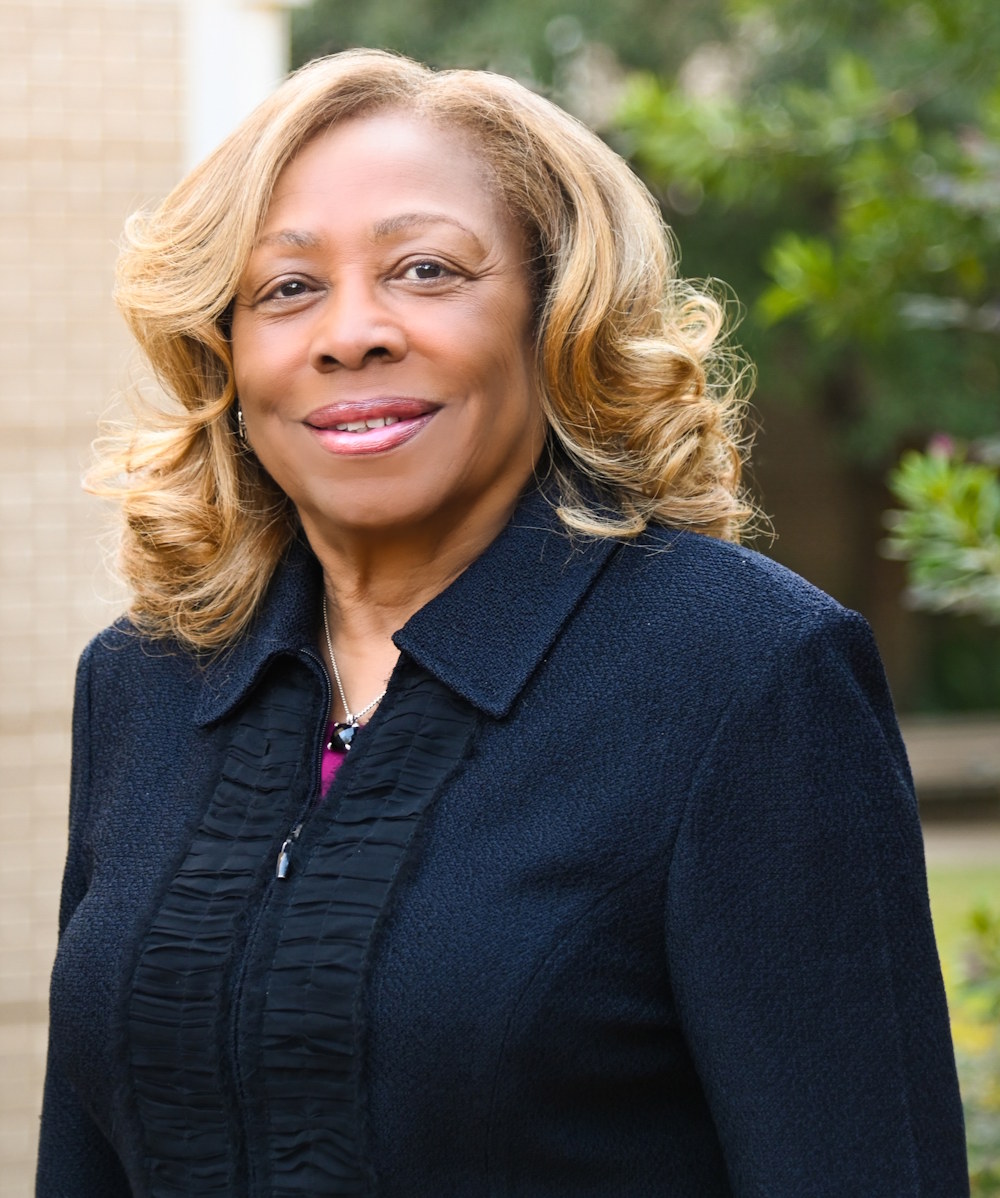
Saundra Glover was the first African American faculty member to achieve tenure (1999) and full professor (2011) at the Arnold School. In addition to leading the Institute for Partnerships to Eliminate Health Disparities as director and the Rural Health Research Center as associate director, she served as HSPM graduate director two different times and held the school’s inaugural role of Associate Dean for Health Disparities and Social Justice.
Over the course of her 25-year career at USC, her numerous awards include the Healthcare
Hero Award (SC Business Network), Living the Legacy Award (National Council of Negro
Women), Excellence in Education Award (SC Rural Health Association), Faculty Service
Award (Arnold School of Public Health) and several USC honors: Martin Luther King
Jr. Social Justice Award, Affirmative Action Award, Faculty Mentor Award, Faculty
Scholarship/Teaching Award, and Outstanding Black Alumni Award. Since her retirement,
Glover has been the recipient of the Distinguished Leadership Award (USDA), First
Ladies Hats and Glove Scholarship (Claflin University), Humanitarian Award (Beta Zeta
Omega Chapter of Alpha Kappa Alpha, Inc.), SC African American Calendar Honoree-2022
Calendar, SC Department of Education), and Distinguished Service Award (Congressional
Record, Congressman James E. Clyburn).
Fifty public health alumni reflect on their educational journeys and the impacts they’ve made across communities, countries, and the world.

Each month, we're telling the stories of alumni, faculty, and leaders whose unique perspectives shed light on the Arnold School across its five-decade history.

Join us as we celebrate the school’s 50th anniversary with guest speakers, symposia, feature stories, and anniversary events for students, alumni, faculty, staff and friends.