Growing up in a rural part of the Lowcountry, Keandra Warren saw first-hand how the absence of specialized speech-language services can lead to
community-wide disparities from an early age. At the same time, she also witnessed
the power of the profession when it helped her mother regain her speech following
a stroke.
The COMD program is rigorous, but the faculty and students are warm and welcoming
and seeing the science come alive in the clinic and watching my skills grow has made
the journey incredibly meaningful.
Keandra Warren
“Participating in her rehabilitation program and seeing how communication can transform
a person's life planted the seed for my career,” says Warren, who moved to the capital
city after high school to study speech-language pathology at Columbia College and
is currently a master’s student at the Arnold School. “As a first-generation student,
finishing this degree is as much about honoring her strength and determination as
it is about achieving my own goals.”
After graduating with her bachelor’s degree, Warren returned to her hometown to join
a private practice that a local therapist had opened to help fill the gap in services.
With two years of experience as a speech-language pathologist assistant, she began
looking at graduate programs. The Arnold School’s Department of Communication Sciences and Disorders (COMD) rose to the top of her list because of its approach to preparing students
as clinical scientists whose training is grounded in evidence-based practices.
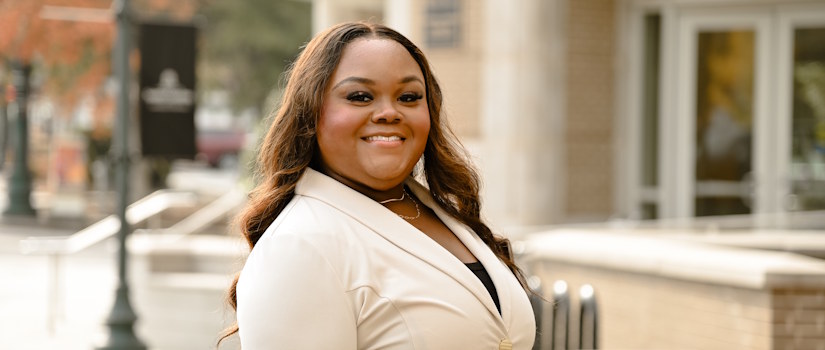
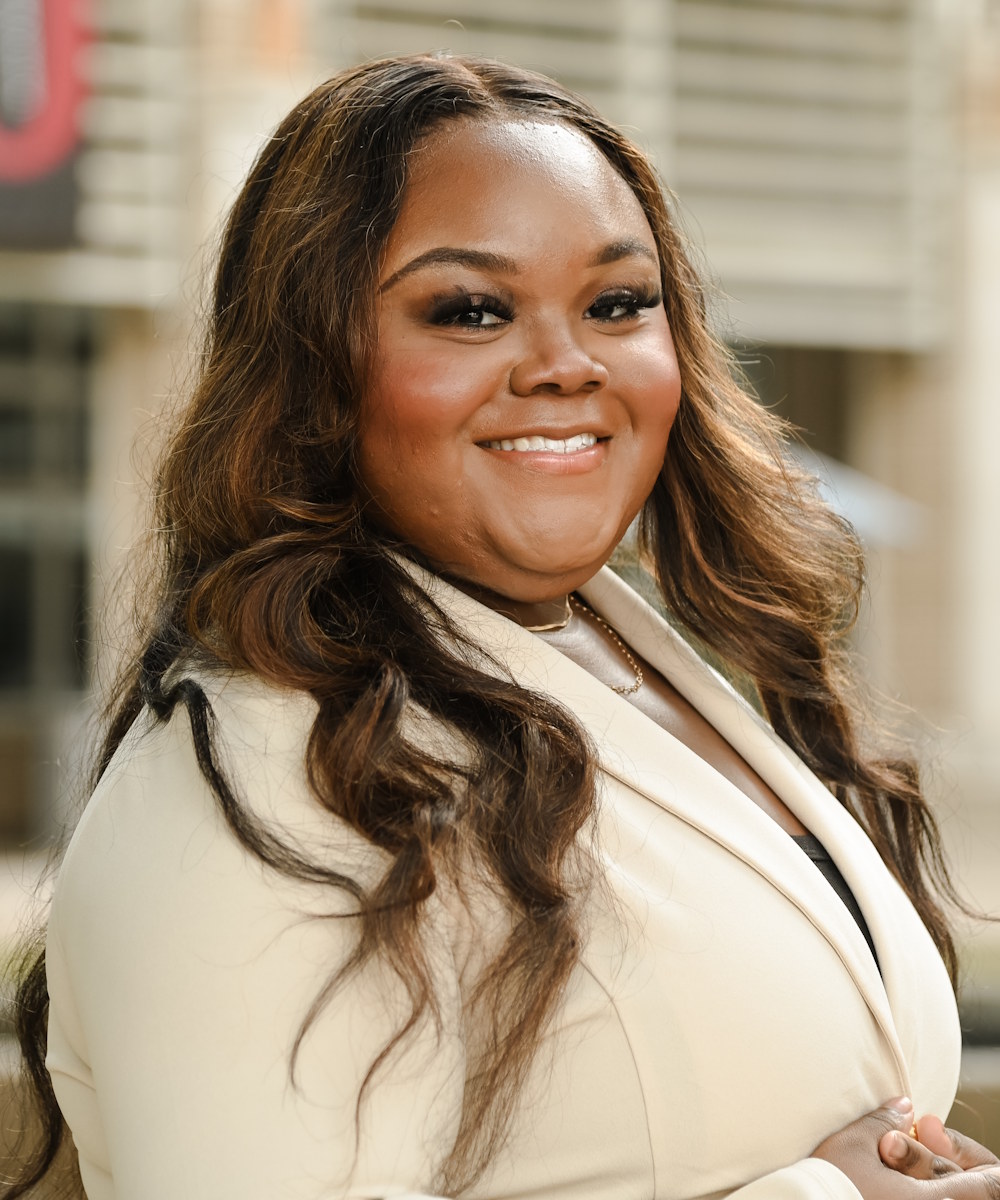
Keandra Warren is a student in the M.S. in Speech-Language Pathology program.
“This hands-on, research-integrated approach, from the on-campus clinic to going into
the field to collect data for research, showed me that USC was the right place to
gain the expertise needed to provide high-quality services in underserved areas,”
Warren says. “The COMD program is rigorous, but the faculty and students are warm
and welcoming and seeing the science come alive in the clinic and watching my skills
grow has made the journey incredibly meaningful.”
“I’m interested in how public health systems can support earlier screening and increase
access to services while implementing community-based solutions that ensure equitable,
high-quality care for every individual,” Warren says. “After graduating next year,
I plan to return home to offer specialized services, such as pediatric feeding and
swallowing, to help meet these needs.”