Skip to Content

Arnold School of Public Health

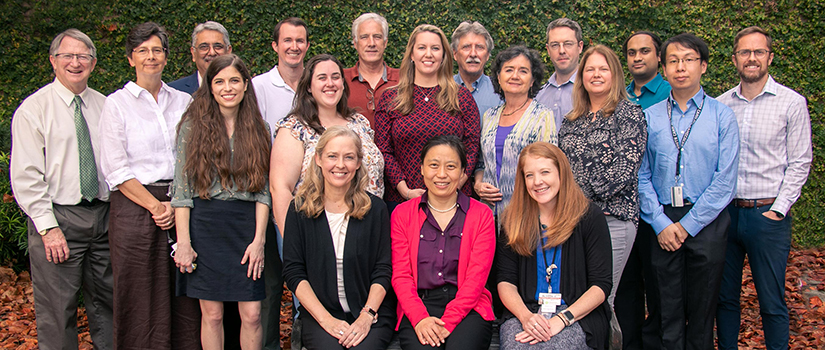
  • Epidemiology and Biostatistics faculty members posing

Epidemiology and Biostatistics

Public Health was defined by C-E.A. Winslow as the science and the art of preventing disease, prolonging life, and promoting physical health and efficiency through organized community efforts with the goal of enabling every citizen to realize his/her birthright of health and longevity. 

The disciplines of epidemiology and biostatistics are essential to achieving the goals of public health, and combining these two disciplines in a single department creates synergies for both training and research. Epidemiologists study the distribution and determinants of health and disease in populations.  Biostatisticians develop and apply statistical theory, methods and techniques to public health research data and the planning, implementation and evaluation of public health programs. Given the strong overlap, epidemiologists and biostatisticians often collaborate to work toward the shared goal of generating and analyzing data to advance the public’s health.

Within the department, the degree programs are administered under two separate streams, the Division of Epidemiology and Division of Biostatistics.
Find out more about the department and what we offer in our welcome from the Chair.

Degrees Offered

We offer eight advanced degrees in epidemiology and biostatistics. Each graduate degree has specific application deadlines and requirements.


Epidemiology and Biostatistics News

pregnant woman sitting on bed

More and more pregnant people are planning births outside of hospitals, but at what risk?

A recent study led by Ph.D. in Epidemiology candidate Marion Howard compared the health outcomes of planned hospital births vs planned community births (i.e., births that were intended to take place at home or at a birthing center).

Emma Boswell

Emma Boswell selected to join National Rural Health Association's Rural Health Fellows Program

Master of Public Health in Epidemiology alumna Emma Boswell is the eighth member of the Rural Health Research Center in the last decade to be invited to join the National Rural Health Association's Rural Health Fellows Program.

Jihong Liu

Healthy start, healthy change

USC features Jihong Liu's MCH research into the developmental origins of disease – how the mother’s health in pregnancy affects her children’s – as well as how a woman’s experiences during pregnancy can affect her own health for a lifetime.

Flooded Farmland

USC researchers offer insights on how the intersection of modern diets, climate, and food systems is increasing inflammation

USC researchers recently reviewed the existing literature on diet-induced inflammation, climate change, and food systems - finding numerous scientific papers focusing on each of these areas but very few that looked at their overlap.

Krystal Cooper

Staff Spotlight: Krystal Cooper

A 2009 alumna of the Master of Health Administration program, Krystal Cooper found her way back to the Arnold School after nearly 10 years with large health care systems.

Marie Thomas

Delores Marie Thomas Research Lab named for beloved program manager

Delores Marie ("Marie") Thomas only had four years at USC, first as part of the COVID-19 testing group and then as a member of Melissa Nolan's infectious disease laboratory, yet her impact touched every one of the faculty, staff, students and community members she interacted with.

More Arnold School News


Challenge the conventional. Create the exceptional. No Limits.

©