4TH ANNUAL LECTURE
Tiny Messengers, Big Consequences: How Cells Transmit Stress and Health Across Generations
Extracellular vesicles act as powerful biological messengers that link stress and
trauma to long-term health — and may even transmit these effects across generations.
Tuesday, March 24, 2026
5:30 PM - 6:30 PM | Lecture Hall
Watch the Livestream
Cells communicate with one another through small, membrane-bound particles known as extracellular vesicles (EVs). Once thought to be cellular debris, EVs are now recognized as powerful mediators of intercellular signaling that contribute to physiological homeostasis, disease risk, and developmental programming.
In this lecture, Tracy L. Bale, PhD, a world-renowned neuroscientist and molecular biologist, will describe how EVs function as biological messengers and discuss their emerging potential as diagnostic and therapeutic biomarkers. This is particularly relevant in psychiatry, where objective biological markers remain largely absent. She will present findings from her work using unbiased proteomic analyses of EVs isolated from human blood samples, which identified a previously unrecognized sensory cell signature associated with post-traumatic stress disorder (PTSD) and childhood trauma — detected decades after the original exposure.
Building on these human data, Dr. Bale will discuss preclinical mouse studies that elucidate mechanistic links between stress, EV secretion, and alterations in sensory signaling pathways. Finally, she will present evidence that EVs can mediate intergenerational communication by interacting with germ cells, thereby influencing embryonic developmental trajectories and long-term health outcomes. Together, these findings position EVs as key biological intermediaries linking environmental stressors to lasting — and potentially heritable — effects on health and disease.
About Dr. Bale

Tracy L. Bale, PhD
The Anschutz Foundation Endowed Chair in Women's Integrated Mental and Physical Health
Research at the Ludeman Center
Director: InterGenerational Stress and Health; Director: Sex Differences Research
University of Colorado, Anschutz Medical Campus
Tracy L. Bale is the Anschutz Foundation Endowed Chair in Women's Integrated Mental and Physical Health at the Ludeman Center and Professor and Director for InterGenerational Stress and Health and the Director for Sex Differences Research in the Department of Psychiatry at the University of Colorado, Anschutz Medical Campus. Her research focuses on the role of stress in neuropsychiatric disease, and the sex differences that underlie disease vulnerability in humans using the mouse as a preclinical model. Dr. Bale’s lab attempts to translate research to humans to identify those processes and biomarkers important for promoting disease risk and resilience, especially toward women’s health and in vulnerable populations. In her Directorship roles, she engages in the community, developing collaborations and partnerships with local organizations and policy makers. She serves on many Scientific Advisory Boards and is the recipient of numerous awards, including the Medtronic Award from the Society for Women’s Health Research and the Daniel H. Efron award from the American College of Neuropsychopharmacology. She is a American Association for the Advancement of Science Fellow and a Member of the National Academy of Medicine. She is the past-President of the International Brain Research Organization (IBRO).
Past Lectures
Dr. Wang gave a lecture on Digital Twin for Health.
A digital twin for health (DT4H) is a virtual representation of a physical system associated with humans, being a human body, an organ, a disease, or a subsystem of the human body. The concept envisions a DT4H faithfully replicating the entire underlying physical system through dynamic synchronization and enabling comprehensive quantitative analysis and predictions for the system. When implemented in healthcare, the DT4H can be used to represent the target system in all phases of healthcare during diagnosis, prognosis, treatment, and prevention to promote individualized precision medicine, personal health and well-being via dynamic engagement and human-environment interactions. In this presentation, Professor Qi Wang will outline the definition of DT4H, development of DT4H technologies, envision its potential applications and impacts, propose strategies to advance DT4Hs for better health, better treatment, discuss major challenges, and make recommendations for future DT4H implementation within healthcare communities.
About Dr. Qi Wang
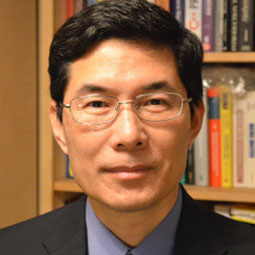 Dr. Qi Wang is a professor of Mathematics in the Department of Mathematics at the
University of South Carolina. He is an applied and computational mathematician and
modeler.
Dr. Qi Wang is a professor of Mathematics in the Department of Mathematics at the
University of South Carolina. He is an applied and computational mathematician and
modeler.
His research interests include modeling and computation of complex systems in materials and life science, development of efficient numerical algorithms for partial differential equations, data science and machine learning applications in materials and life science. He is currently developing an individualized, multiscale, multimodal digital twin framework for cancer patients to be used in optimizing the patient treatment pathway. He is especially interested in developing cutting-edge deep learning models to approximate complex biomedical systems of spatial-temporal resolution. He has published over 200 peer-reviewed journal papers and has been continuously funded by federal funding agencies.
Dr. Wang gave a lecture on Breaking Barriers in Blood Analysis: Smarter Solutions with Automation and AI.
Plasma proteomics is a powerful tool that helps scientists discover new disease markers by analyzing many proteins in the blood at once. Because some proteins are much more abundant than others, it can be difficult to detect those present in very small amounts. In this presentation, Professor Qian Wang will share efforts to overcome this challenge by developing new techniques for identifying important proteins in blood and cell samples. By combining advanced materials with automated technology, he and his research team successfully detected a wide range of proteins with high accuracy and efficiency. The goal is to create better ways to predict diseases by recognizing unique protein patterns, which requires close collaboration between engineers, doctors, and data scientists.
As part of the SC ADAPT program, Professor Qian Wang’s team in Thrust I is focused on using a mix of experimental and clinical data to improve medical decision-making. They are using explainable artificial intelligence (XAI) to develop smart medical devices that provide clear and reliable results. Dr. Wang will introduce the strategy for building these AI-driven devices, including two projects in progress: one for assessing wound healing using electrical signals and another for analyzing antibiotic effectiveness in tiny test chambers.
About Dr. Wang
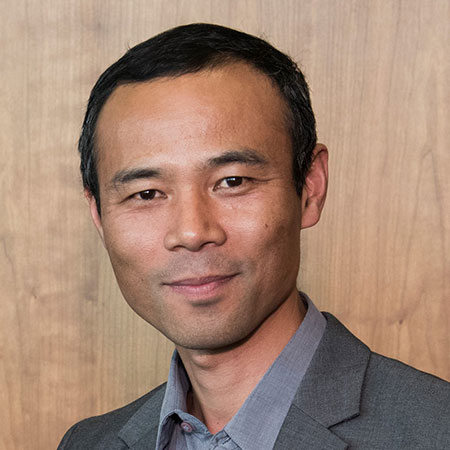 Professor Qian Wang is a co-leader of the Thrust-1 of the SC ADAPT program. He received
his B.S. and Ph.D. degrees in chemistry from Tsinghua University, Beijing, China,
in 1992 and 1997, respectively. After postdoctoral experiences at University of Lausanne,
Switzerland, and the Scripps Research Institute, he started as an Assistant Professor
at University of South Carolina in 2003, where he was promoted to Associate Professor
(2008), Full Professor (2011), and is currently the Carolina Distinguished Professor
of Chemistry. The overall research objective of Dr. Wang’s laboratory focuses on using
chemical biology tools to probe intracellular activities and the development of hierarchically
structured nanomaterials to study the cooperative response of cells to extracellular
matrixes. Professor Wang has supervised more than 100 doctoral students and postdoctoral
fellows, delivered over 160 invited talks, and published over 300 publications in
peer reviewed journals. He has received numerous awards, including NSF CAREER Award
(2008), the Alfred P. Sloan Research Scholar Award (2008), the Camille Dreyfus Teacher
Scholar Award (2008), the CAPA Distinguished Junior Faculty Award (2008), NSF American
Competitiveness Fellow Award (2009), the Robert L. Sumwalt Professor of Chemistry
(2009), the South Carolina Governor’s Young Scientist Award (2009), the USC Rising
Star Award (2010), the AAAS Fellow (2012), the South Carolina Chemist Award (2016),
the USC Russel Research Award (2017), and the ACS Memphis Section Southern Chemist
Award (2018).
Professor Qian Wang is a co-leader of the Thrust-1 of the SC ADAPT program. He received
his B.S. and Ph.D. degrees in chemistry from Tsinghua University, Beijing, China,
in 1992 and 1997, respectively. After postdoctoral experiences at University of Lausanne,
Switzerland, and the Scripps Research Institute, he started as an Assistant Professor
at University of South Carolina in 2003, where he was promoted to Associate Professor
(2008), Full Professor (2011), and is currently the Carolina Distinguished Professor
of Chemistry. The overall research objective of Dr. Wang’s laboratory focuses on using
chemical biology tools to probe intracellular activities and the development of hierarchically
structured nanomaterials to study the cooperative response of cells to extracellular
matrixes. Professor Wang has supervised more than 100 doctoral students and postdoctoral
fellows, delivered over 160 invited talks, and published over 300 publications in
peer reviewed journals. He has received numerous awards, including NSF CAREER Award
(2008), the Alfred P. Sloan Research Scholar Award (2008), the Camille Dreyfus Teacher
Scholar Award (2008), the CAPA Distinguished Junior Faculty Award (2008), NSF American
Competitiveness Fellow Award (2009), the Robert L. Sumwalt Professor of Chemistry
(2009), the South Carolina Governor’s Young Scientist Award (2009), the USC Rising
Star Award (2010), the AAAS Fellow (2012), the South Carolina Chemist Award (2016),
the USC Russel Research Award (2017), and the ACS Memphis Section Southern Chemist
Award (2018).
Dr. Mogil gave a lecture on Sex Differences in Pain Throughout the Lifespan.
Evidence is emerging that men and women experience pain differently. Pain researchers have now come to some consensus regarding the existence of small quantitative sex differences in the sensitivity to and tolerance of pain in humans. In addition, evidence is rapidly emerging that the sexes may differ qualitatively in their neural mediation of pain and analgesia. That is, different genetic factors, neural circuits, and neuromodulators may be relevant to pain processing in males and females. Dr. Mogil will present several research stories suggestive of fundamental sex dimorphism in pain processing, and the interaction of pain with other biological phenomena including social behavior, memory, and mortality.
About Dr. Mogil
 Jeffrey S. Mogil, PhD, FCAHS, FRSC, is currently the E.P. Taylor Professor of Pain
Studies and a Distinguished James McGill Professor at McGill University. Dr. Mogil
has made seminal contributions to the fields of pain genetics, sex differences in
pain, and pain testing methods in the laboratory mouse. He has published over 270
manuscripts and book chapters and currently has an h-index of 97. He is the recipient
of lifetime achievement awards from the American and Canadian Pain Societies and the
Canadian Psychological Association, and is a Fellow of the Canadian Academy of Health
Research and the Royal Society of Canada. He has served as Neurobiology Section Editor
at the journal, Pain, as a Councilor at the International Association for the Study
of Pain, and was the Chair of the Scientific Program Committee of the 13th World Congress
on Pain. He is also the founder and director of the North American Pain School.
Jeffrey S. Mogil, PhD, FCAHS, FRSC, is currently the E.P. Taylor Professor of Pain
Studies and a Distinguished James McGill Professor at McGill University. Dr. Mogil
has made seminal contributions to the fields of pain genetics, sex differences in
pain, and pain testing methods in the laboratory mouse. He has published over 270
manuscripts and book chapters and currently has an h-index of 97. He is the recipient
of lifetime achievement awards from the American and Canadian Pain Societies and the
Canadian Psychological Association, and is a Fellow of the Canadian Academy of Health
Research and the Royal Society of Canada. He has served as Neurobiology Section Editor
at the journal, Pain, as a Councilor at the International Association for the Study
of Pain, and was the Chair of the Scientific Program Committee of the 13th World Congress
on Pain. He is also the founder and director of the North American Pain School.
Millecamps, M., Sotocinal, S.G., Austin, J.-S., Stone, L.S., and Mogil, J.S. Sex-specific effects of neuropathic pain on long-term pain behavior and mortality in mice. Pain, 164:577‑586, 2023. (DOI: 10.1097/j.pain.0000000000002742)
Rosen, S.F., Lima, L.V., Chen, C., Nejade, R., Zhao, M., Nemoto, W., Toprak, E., Skvortsova, A., Tansley, S.N., Zumbusch, A., Sotocinal, S.G., Pittman, C., and Mogil, J.S. Olfactory exposure to late pregnant and lactating mice causes stress-induced analgseia in male mice. Science Advances, 8:eabi9366, 2022. (DOI: 10.1126/sciadv.abi9366)
Muralidharan, A., Sotocinal, S.G., Yousefpour, N., Akkurt, N., Lima, L.V., Tansley, S., Parisien, M., Wang, C., Austin, J.-S., Ham, B., Dutra, G.M.G.S., Rousseau, P., Maldonado-Bouchard, S., Clark, T., Rosen, S.F., Majeed, M.R., Silva, O., Nejade, R., Li, X., Donayre Pimentel, S., Nielsen, C.S., Neely, G.G., Autexier, C., Diatchenko, L., Ribeiro-da-Silva, A., and Mogil, J.S. Long-term male-specific chronic pain via telomere- and p53-mediated spinal cord cellular senescence. Journal of Clinical Investigation, 132:e151817, 2022. (DOI: 10.1172/JCI151817)
Tansley, S., Uttam, S., Guzman, A.U., Yaqubi, M., Pacis, A., Parisien, M., Deamond, H., Wong, C., Rabau, O., Brown, N., Haglund, L., Ouellet, J., Santaguida, C., Ribeiro-da-Silva, A., Tahmasebi, S., Prager-Khoutorksy, M., Ragoussis, J., Zhang, J., Salter, M.W., Diatchenko, L., Healy, L.M.*, Mogil, J.S.*, and Khoutorsky, A.* Single-cell RNA sequencing reveals time- and sex-specific responses of mouse spinal cord microglia to peripheral nerve injury and links ApoE to chronic pain. Nature Communications, 13:843, 2022. (*co-corresponding authors) (DOI: 10.1038/s41467-022-28473-8)
Linnstaedt, S.D., Rueckeis, C.A., Riker, K.D., Pan, Y., Wu, A., Yu, S., Wanstrath, B., Gonzalez, M., Harmon, E., Green, P., Chen, C., King, T., Lewandowski, C., Hendry, P.L., Pearson, C., Kurz, M.C., Datner, E., Velilla, M.A., Domeier, R., Liberzon, I., Mogil, J.S., Levine, J., and McLean, S.A. microRNA-19b predicts widespread pain and posttraumatic stress symptom risk in a sex-dependent manner following trauma exposure. Pain, 161:47-60, 2020. (DOI: 10.1097/j.pain.0000000000001709)
Mogil, J.S. Qualitative sex differences in pain processing: evidence of a biased literature. Nature Reviews Neuroscience, 21:353-364, 2020. (DOI: 10.1038/s41583-020-0310-6)
Raja, S.N., Carr, D.B., Cohen, M., Finnerup, N.B., Flor, H., Gibson, S., Keefe, F.J., Mogil, J.S., Ringkamp, M., Sluka, K.A., Song, X.-J., Stevens, B., Sullivan, M., Tutelman, P., Ushida, T., and Vader, K. The revised IASP definition of pain: concepts, challenges, and compromises. Pain, 161:1976-1982, 2020. (DOI: 10.1097/j.pain.000000000001939)
Boerner, K.E., Chambers, C.T., Gahagan, J., Keogh, E., Fillingim, R.B., and Mogil, J.S. The conceptual complexity of gender and its relevance to pain. Pain, 159:2137-2141, 2018. (DOI: 10.1097/j.pain.0000000000001275)
Mapplebeck, J.C.S., Dalgarno, R., Tu, Y.S., Moriarty, O., Beggs, S., Kwok, C.H.T., Halievski, K., Assi, S., Mogil, J.S., Trang, T., and Salter, M.W. Microglial P2X4R-evoked pain hypersensitivity is sexually dimorphic in rats. Pain, 159:1752-1763, 2018. (DOI: 10.1097/j.pain.0000000000001265)
Klein, S.L., Schiebinger, L., Stefanick,M.L., Cahill, L., Danska, J., de Vries, G.J., Kibbe, M.R., McCarthy, M.M., Mogil, J.S., Woodruff, T.K., and Zucker, I. Sex inclusion in basic research drives discovery. Proceedings of the National Academy of Sciences, USA, 112:5257-5258, 2015. (DOI: 10.1073/pnas.1502843112)
Sorge, R.E., Mapplebeck, J.C.S., Rosen, S., Beggs, S., Taves, S., Alexander, J.K., Martin, L.J., Austin, J.-S., Sotocinal, S.G., Chen, D., Yang, M., Shi, X.Q., Huang, H., Pillon, N.J., Bilan, P.J., Tu, Y., Klip, A., Ji, R.-R., Zhang, J., Salter, M.W. and Mogil, J.S. Different immune cells mediate mechanical pain hypersensitivity in male and female mice. Nature Neuroscience, 18:1081-1083, 2015. (DOI: 10.1038/nn.4053)
Sorge, R.E., Martin, L.J., Isbester, K.A., Sotocinal, S.G., Rosen, S., Tuttle, A.H., Wieskopf, J.S., Acland, E.L., Dokova, A., Kadoura, B., Leger, P., Mapplebeck, J.C.S., McPhail, M., Delaney, A., Wigerblad, G., Schumann, A.P., Quinn, T., Frasnelli, J., Svensson, C.I., Sternberg, W.F., and Mogil, J.S. Olfactory exposure to males, including human males, stresses rodents. Nature Methods, 11:629-632, 2014. (DOI:10.1038/nmeth.2935)
Dr. Mogil’s laboratory https://mogilab.ca/
For more information about Dr. Mogil, visit:
https://www.mcgill.ca/psychology/jeffrey-mogil
Dr. Klein gave a lecture on Sex-Specific Differences and Pregnancy Impact Outcomes from COVID-19 Infection and Vaccination.
The ongoing COVID-19 pandemic has increased awareness about sex-specific differences in immunity and outcomes following respiratory virus infections. Strong evidence of a male bias in COVID-19 disease severity will be presented based on clinical data and preclinical animals models, which illustrate sex differential immune responses against SARS-CoV-2. Prior to the pandemic, data from other viral infections, including influenza viruses, showed profound sex differences in virus-specific immunity, including locally in the respiratory tract. We have used influenza A viruses to interrogate sex-specific immunity to infection and vaccination. Although males are more susceptible to most viral infections, females possess immunological features that contribute to greater vulnerability to immune-mediated pathology while experiencing better protection following vaccination. Both sex chromosome complement and related X-linked genes (e.g., TLR7) as well as sex steroids, including estrogens and androgens, play important roles in mediating the development of sex differences in immunity to respiratory viral infections and vaccination.
About Dr. Klein
 Dr. Klein is a Professor of Molecular Microbiology & Immunology, Biochemistry & Molecular
Biology, and International Health at the Johns Hopkins Bloomberg School of Public
Health and Department of Medicine at the Johns Hopkins School of Medicine. She is
an expert on sex and gender differences in immune responses and susceptibility to
infection and vaccination, with interrogation of sex-specific effects of aging in
humans and animal models. She currently has over 175 peer-reviewed publications, authored
several book chapters, and edited three books on the broad topics of sex differences
in response to infection and treatments for infectious diseases. During the 2009 influenza
pandemic, she was commissioned by the WHO to evaluate and publish a report on the
impact of sex, gender, and pregnancy on the outcome of influenza virus infection.
During the current COVID-19 pandemic, Dr. Klein has written commentaries for several
journals and been interviewed by several major news media outlets about sex differences
in immunity, disease outcomes, and responses to vaccines. She is: PI of the Johns
Hopkins Specialized Center for Research Excellence (SCORE) in sex and age differences
in immunity to influenza, MPI of the Johns Hopkins COVID-19 Serology Center of Excellence,
MPI of an NIH Merit Award to study sex differences in the pathogenesis of respiratory
microbial infections, co-chair of the advisory board of the Johns Hopkins Building
Interdisciplinary Research Careers in Women’s Health, member of the Advisory Committee
on Research on Women’s Health at NIH, co-director of the Johns Hopkins Center for
Women’s Health, Sex, and Gender Research, and a fellow of the American Academy of
Microbiology and the American Association for the Advancement of Science.
Dr. Klein is a Professor of Molecular Microbiology & Immunology, Biochemistry & Molecular
Biology, and International Health at the Johns Hopkins Bloomberg School of Public
Health and Department of Medicine at the Johns Hopkins School of Medicine. She is
an expert on sex and gender differences in immune responses and susceptibility to
infection and vaccination, with interrogation of sex-specific effects of aging in
humans and animal models. She currently has over 175 peer-reviewed publications, authored
several book chapters, and edited three books on the broad topics of sex differences
in response to infection and treatments for infectious diseases. During the 2009 influenza
pandemic, she was commissioned by the WHO to evaluate and publish a report on the
impact of sex, gender, and pregnancy on the outcome of influenza virus infection.
During the current COVID-19 pandemic, Dr. Klein has written commentaries for several
journals and been interviewed by several major news media outlets about sex differences
in immunity, disease outcomes, and responses to vaccines. She is: PI of the Johns
Hopkins Specialized Center for Research Excellence (SCORE) in sex and age differences
in immunity to influenza, MPI of the Johns Hopkins COVID-19 Serology Center of Excellence,
MPI of an NIH Merit Award to study sex differences in the pathogenesis of respiratory
microbial infections, co-chair of the advisory board of the Johns Hopkins Building
Interdisciplinary Research Careers in Women’s Health, member of the Advisory Committee
on Research on Women’s Health at NIH, co-director of the Johns Hopkins Center for
Women’s Health, Sex, and Gender Research, and a fellow of the American Academy of
Microbiology and the American Association for the Advancement of Science.
For more information about Dr. Klein, visit: