
Last month, the American Hospital Association released a report about the increasing risk to rural healthcare throughout the United States. More than 40 percent of rural hospitals operate at a financial loss, and hundreds are at high financial risk.
“In the past two decades, close to 200 rural hospitals have closed — 44 since 2020 alone,” writes Kevin J. Bennett, director of USC’s Center for Rural and Primary Healthcare, in a 2026 article for The Conversation.
“Hundreds more have cut much-needed health services, such as maternity care and chemotherapy treatments. Nearly half are losing money on their day-to-day operations, putting them at risk of closure.”
The state of South Carolina has only three critical access hospitals in rural areas, serving a population of around 1.7 million. More than 425,000 residents cannot drive from their home to a hospital within half an hour. From travel distances to an overall shortage of practitioners, rural communities face significant barriers to adequate healthcare, leading to poorer health outcomes and an increased mortality rate.
The University of South Carolina is bringing major players to the fight for better rural health.
USC’s Rural and Minority Research Center and South Carolina Center for Rural and Primary Healthcare are leading research both within the state and nationwide. Health science researchers from across the university system are working to understand and address the rural health care gap. Many of our graduates are making a difference in rural areas, and future practitioners are training to serve South Carolina and beyond through innovative programs in medicine, nursing, pharmacy, behavioral health and more.
For National Rural Health Month, we’ve gathered a few highlights of the work being done by the USC community.

On average, rural residents live farther away from hospitals compared to urban residents. Cassie Lewis Odahowski, an assistant professor of public health, says those longer distances can lead to worse health outcomes.
“Too often our rural population struggles to overcome barriers to access consistent care,” she says. “That impacts people’s experience and survival.”
Odahowski specializes in spatial epidemiology — how geography impacts disease and health outcomes. In analyzing data, she uses ArcGIS, an advanced online mapping tool that allows researchers to dig deeper into data for findings that may not be readily apparent.
Consider travel distance: Looking at the data, researchers could say that South Carolina residents need to travel an average distance of 12.9 miles to reach a hospital.
That’s true, but Odahowski says this average doesn’t factor in the population density of the metropolitan areas. In rural areas, people are much more spread out. Traditional mapping techniques may overlook the time it takes to drive winding back roads.
“The map created with ArcGIS shows us the areas across our state that are beyond a 30-minute travel time based on our road network. In actuality, South Carolina has more than 425,000 residents who live more than 30 minutes from a hospital,” she says.
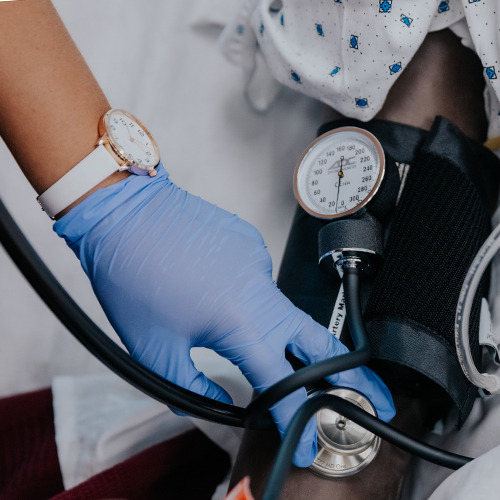
In rural Newberry, Casey Purcell (’19 MSN) is helping patients address barriers to care while providing the education they need to take control of their health. After earning her nursing degree from Newberry College, Purcell realized she wanted to take her career further — and make an even bigger impact in the lives of her patients.
While working, she enrolled in the Family Nurse Practitioner program at USC’s College of Nursing. She knew earning her master’s would equip her to counsel patients on preventing major hospitalizations and illnesses associated with lifestyle choices or unmanaged medical conditions.
After graduation, Purcell became a provider at the Newberry College Clinic, which is open to the public. Working at the clinic exposed her to a larger need within the Newberry community — access to primary and specialty care.
“Part of the reason the clinic sees so many people is because of the lack of primary care and specialty offices,” she says.
Now, Purcell is a provider at Newberry Health Wound Care and Hyperbaric Center. Through this work, Purcell is fulfilling the purpose that first led her to advanced clinical practice: expanding access to quality care in a rural community while helping patients understand their conditions and take an active role in their health.
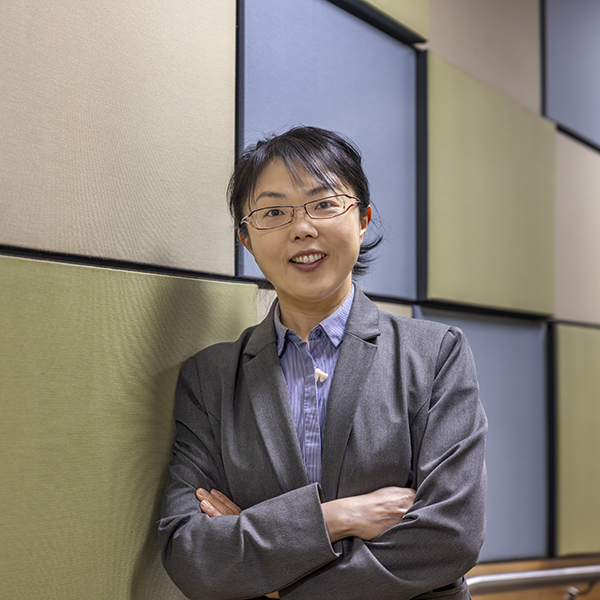
Two young girls walked into a hospital one afternoon after school. Their grandmother had gone to the emergency department the day before with respiratory symptoms. She had traveled an hour from her rural home in Taiwan to the city hospital for treatment. Instead, the girls found her lying in a hallway, given a bed but not a room.
Peiyin Hung was about 10 years old that day, but she still remembers her grandmother’s words: “Study hard so your voice will be heard.”
Just a few days later, Hung’s grandmother died of complications from her illness.
“Every time I talk about my path to public health, I come back to that moment,” says Hung, associate professor and co-director of the Rural Health Research Center. “That day when my cousin and I went to visit our grandmother, we asked each other: ‘In the future, how can we do better?’”
Hung became a public health researcher, eventually finding her academic home in the Arnold School of Public Health.
“My goal is that I want to see all rural families, whether in Taiwan, South Carolina or anywhere in the world, to have the ability to access care where they live,” she says. “That’s what drives my work.”
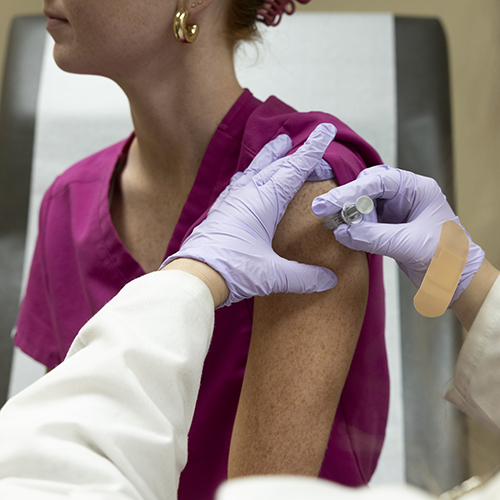
The College of Pharmacy is helping bridge health care gaps in rural communities through its participation in RURAL-CP, the nation’s first multistate, practice-based research network dedicated to supporting rural community pharmacies.
RURAL-CP represents a collaboration among eight schools and colleges of pharmacy across the southeastern United States.
Tessa Hastings, assistant professor and executive director of the Center for Outcomes Research and Evaluation, serves as South Carolina’s liaison for the innovative network, which spans more than 160 pharmacies, including 22 in South Carolina.
“Pharmacies are an incredible health care resource, and, in many rural communities, they’re often the only point of care,” Hastings says. “There’s so much vital work happening in these settings that deserves support and recognition.”
The network takes a unique approach by allowing member pharmacies to drive the research agenda. RURAL-CP asks participating pharmacies to identify their communities’ most pressing needs.
“We want to hear directly from pharmacists what issues they are seeing in their communities and how research can best support their needs,” Hastings says.
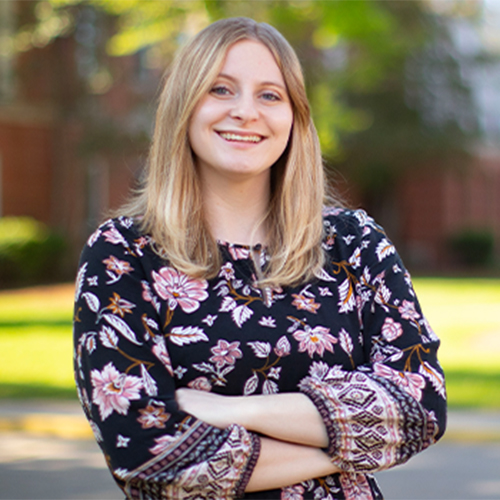
Clay County, Kentucky, is a small Appalachian community that for decades has faced economic hardship, elevated cancer rates and lingering effects of the opioid epidemic. Access to general health care can be limited and specialized services often require hours of travel.
Ashton Farmer, a genetic counseling student at the Floyd School of Medicine, hopes to change that.
“I was born and raised there, so I saw firsthand the level of health need, the low health literacy, and the barriers to access, and how all of that impacted people,” Farmer said.
She set her sights on going into genetic counseling, but with a very specific track in mind: studying rural health care access in Appalachian Kentucky.
When Farmer applied for graduate schools with the goal, the response was mixed.
“At some schools, I got blank stares,” she said. “Rural health isn’t really a focus in genetic counseling yet.”
But at the Floyd School of Medicine, faculty responded differently.
“They didn’t just say they valued rural health. They showed it,” she said.
Faculty supported her thesis proposal, and the school provided funding assistance for her research. Classroom discussions actively encouraged diverse regional perspectives. “They’ve truly championed this work,” Farmer said.
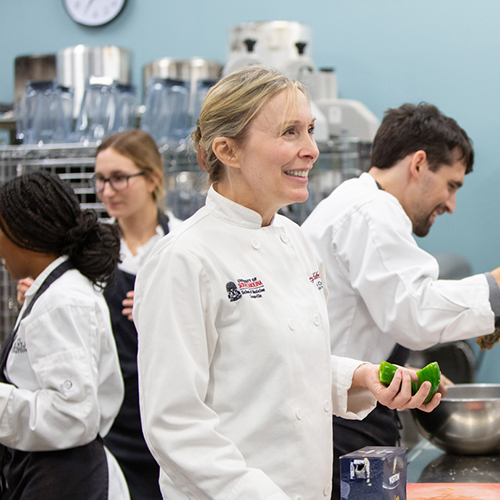
When USC established a new medical school at its Greenville campus in 2012, it made the innovative decision to entwine aspects of nutrition, exercise, sleep and other lifestyle behaviors extensively throughout its curriculum.
Lifestyle medicine is an evidence-based medical specialty that uses therapeutic lifestyle interventions to prevent, treat and, in some cases, reverse chronic diseases such as diabetes, heart disease and obesity.
In addition to reducing blood pressure and improving cardiovascular health, lifestyle interventions have shown remission potential for patients with prediabetes or type 2 diabetes diagnoses — areas of growing need in South Carolina, especially in rural communities.
Many rural areas are food deserts or food swamps — where low-income residents have to travel more than 10 miles to reach a grocery store or available food suppliers don’t have fresh, nutrition-dense food.
That’s why lifestyle medicine is a valuable tool for medical providers, including those who will work in rural and underserved communities. The curriculum, created and directed by Professor Jennifer Trilk, includes required lifestyle content across every year of training. The school added culinary medicine opportunities for all first- and fourth-year students in 2017 and plans to launch a mobile teaching kitchen in communities of need in 2026.
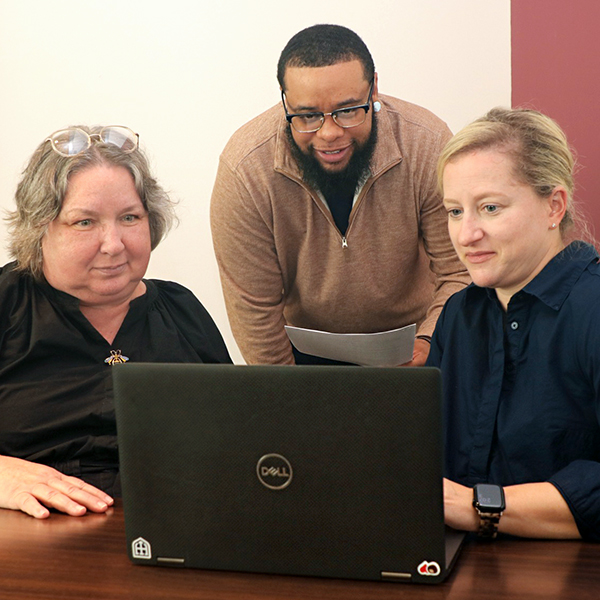
An initiative funded by a grant from the Center for Rural and Primary Healthcare is helping to prepare Master of Social Work students for rural behavioral health practice. The Rural Occupations Workforce Expansion will place 14 students during the two years of the grant in internships in rural areas.
U.S. Army and National Guard veteran Landon Pitts is among seven students named as a ROWE Scholar in its inaugural year.
“My journey began with serving fellow veterans, but over time volunteering within my community, especially rural areas like my home county become a calling for me,” says Pitts, who will complete his MSW in 2027.
ROWE Scholars receive a stipend, complete a leaning module on rural behavioral health practice and participate in online case-based discussions as well as conferences and trainings. The program also offers trainings for behavioral health care practitioners.
“South Carolina is a largely rural state, and those communities have unique strengths and some challenges for access to services,” says principal investigator Aidyn Iachini. “Our goal is to both prepare our students with specialized training for the complexities of serving in these communities and to support current practitioners.”
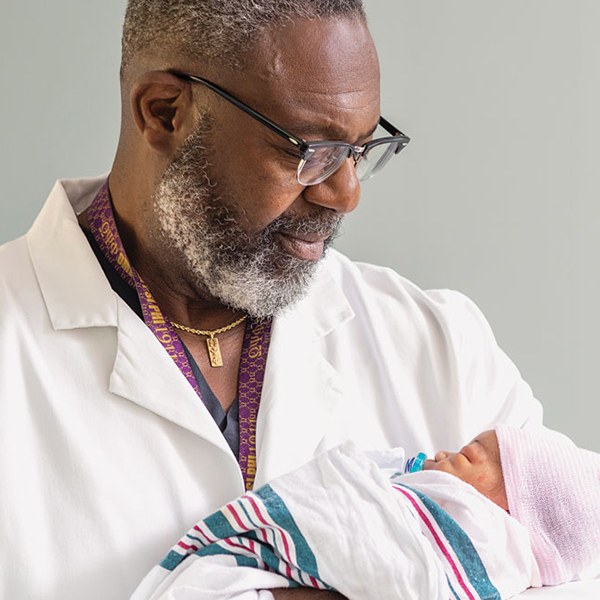
Last spring, Carolinian visited several alumni whose small-town efforts are having a big impact in rural areas. These proud health care workers showed us the meaning of dedication and their commitment to the people and communities they serve.
When necessities were in short supply during COVID, the people of Hartsville took care of Dr. Leroy Robinson. “I would come home from work, and there would be toilet tissue on my porch, there would be hand sanitizer, there would be Lysol,” says Robinson, ’90 M.D. “They made sure I had it. They wanted me to stay healthy.”
That’s because Robinson, an OB-GYN with Carolina Pines, is one of the most beloved physicians around. Since coming to Hartsville more than 30 years ago, he has delivered more than 5,000 babies. In a community with a population of approximately 7,400 within the city limits, it’s safe to say he has touched the lives of virtually every resident.
“No matter what, I think I’ve made a difference, even if it’s just here in small town Hartsville, South Carolina,” he says. “I’ve delivered babies who are all over the world now... I’ve made a difference, and that difference is going to make a difference elsewhere.”
