Camera pans from an overhead view of campus to a view of a statue through a crowd to a shot of a building to a view of a fountain to a receding view of the USC smokestack.
Each year, the University of South Carolina celebrates exemplary alumni and friends with six key awards. Bestowed by the Alumni Association, the awards reflect the values that define the Gamecock community: service, integrity, character and leadership. In addition, every two years the president of the Alumni Association’s Board of Governors names a recipient of the Bethea Volunteer Service Award.
In advance of Homecoming events Nov. 6-8, here is an introduction to these inspiring alumni award winners. Look out for more in-depth stories on these winners and their Carolina journeys in the January edition of Carolinian magazine.
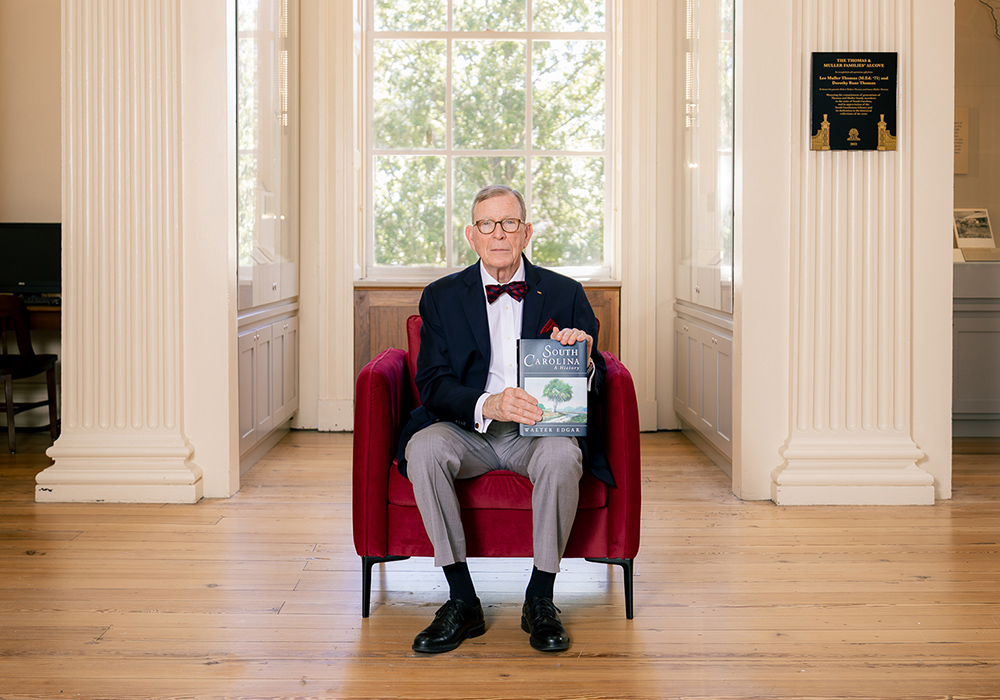
Walter Edgar
Algernon Sydney Sullivan Award
’67 M.A., history
’69 Ph.D., history
For 40 years, Walter Edgar taught students in University of South Carolina classrooms. But the now-retired professor also canvassed the state, speaking at local historical societies and museums about the Palmetto State’s complex past.
“I love telling stories, and I love history,” says Edgar, who taught at USC from 1972 to 2012, founded the history department’s public history program in 1975 and was director of the Institute for Southern Studies until his retirement.
“Telling the story of South Carolina is rich, and it’s complicated. There are parts of it that make us all uncomfortable, but it’s part of the bigger picture of American history.”
Edgar graduated in 1965 from Davidson College, then completed his master’s and doctoral degrees at USC. He served two years in the Army, including a tour in Vietnam on an advisory team. During his tenure at USC, he produced more than a dozen books about South Carolina and Southern history, including The South Carolina Encyclopedia and Partisans and Redcoats: The Southern Conflict that Turned the Tide of the American Revolution.
When the Confederate flag was removed from the State House dome in 2000, Edgar was the featured scholar on a one-time SCETV radio broadcast, which became a weekly program. Walter Edgar’s Journal, which encompasses South Carolina history, arts and culture topics, is now a podcast.
“Forty years in the classroom was long enough, but I feel like I’m still teaching through the Journal,” he says. “I’ve got a shelf full of books about South Carolina-related subjects and a lot of other stories to explore, as well. I’ll keep doing it as long as they’ll let me.”
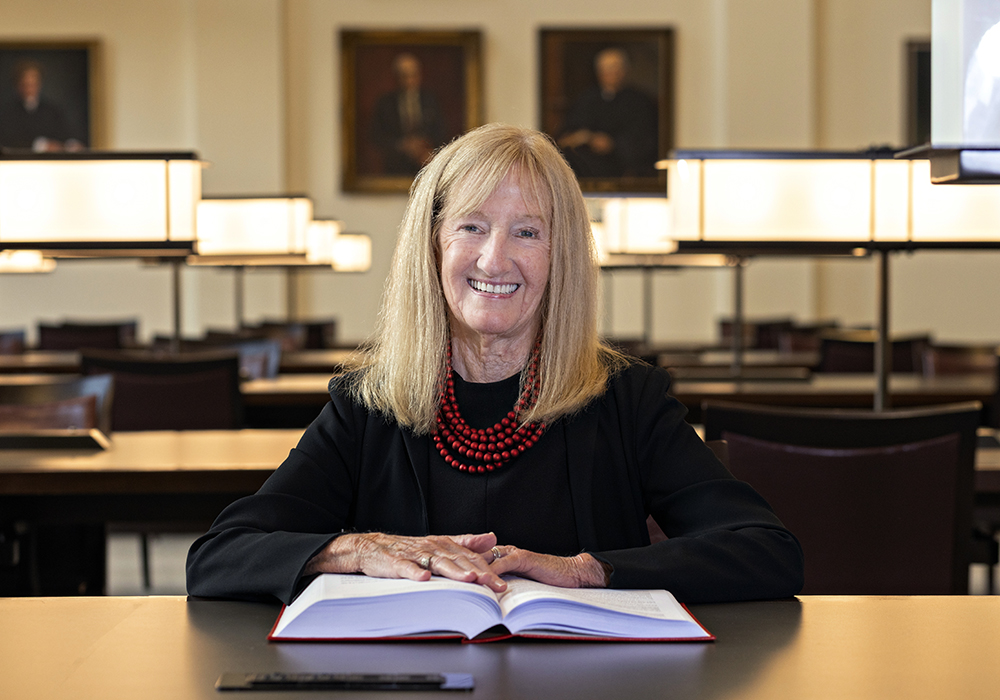
E. Scott Moïse
Bethea Volunteer Service Award
’74 education, secondary english
’89 law
Scott Moïse came to the University of South Carolina in 1970 thinking she wouldn’t graduate. It wasn’t until a French instructor told her she had what it takes to go far in life that the Sumter native believed she could. So, she did — teaching before earning a law degree and embarking on a decades-long legal career in South Carolina.
Back at USC for law school, Moïse’s interest was sparked in the Socratic seminars her law professors taught. And then another professor took her aside and reinforced her sharp intellect and strong work ethic. It fueled her to finish her degree in 1989 as editor in chief of the South Carolina Law Review. She hasn’t stopped since.
The longtime civil defense attorney at Nelson Mullins has carved out an impressive legal career in the decades since, and through it all she’s made time for her (twice over) alma mater.
She’s served as a member and committee chair of the USC Board of Trustees, chair of the Board of Visitors and president of the Alumni Association. She’s put in the hours attending hundreds of USC football and basketball games. And for 30 years she’s taught advanced legal writing at the Joseph F. Rice School of Law.
“I keep coming back because of what I received here,” Moïse says, “and I think I can do the same for other people.”
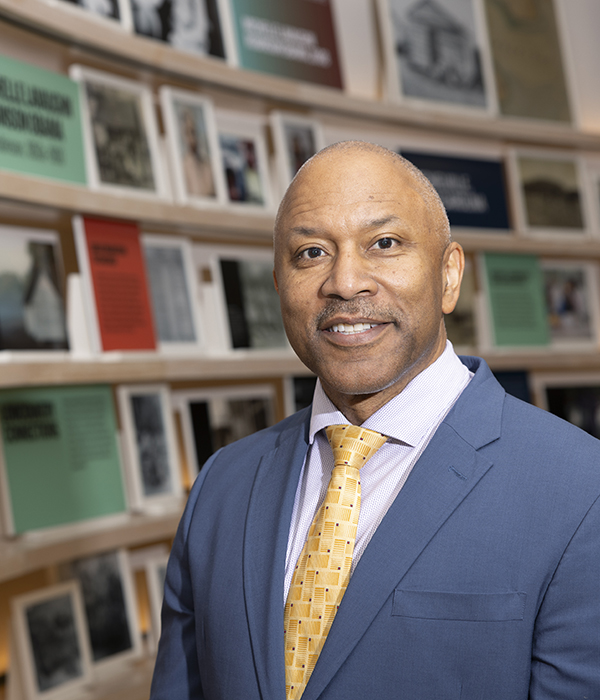
Jim Stuckey
Distinguished Alumni Award
’89 journalism
As vice president and general counsel of Dominion Energy South Carolina, Jim Stuckey, ’89 journalism, oversees a 46-person legal team. But the Bishopville, South Carolina, native’s career with the energy provider predates the 2018 merger with SCANA. Since he arrived as an HR attorney in 2013, his responsibilities have touched everything from litigation to real estate, contract and environmental law.
Previously, as chief legal counsel to Gov. Jim Hodges, Stuckey played key roles in launching the South Carolina Education Lottery and in the compromise that removed the Confederate flag from the State House dome. He was also co-counsel in the landmark South Carolina Supreme Court case Hodges v. Rainey, which validated the governor’s authority to remove the chairman of the public service authority, Santee Cooper.
It all started at USC. Stuckey’s law degree may be from Duke, but the Carolina Scholar and Honors College graduate calls his undergraduate experience foundational. Studying journalism taught him the art of the interview, which serves him well in depositions, and gave him valuable experience working under pressure.
He also found a range of mentors, including Erik Collins, whose media law class at USC set a high bar before Stuckey even finished undergrad.
“I used to joke at Duke that I actually took what was the equivalent of a law school course in journalism school. I just didn’t realize it at the time,” he says. “The caliber of his media law class was as rigorous as anything I experienced at Duke School of Law.”
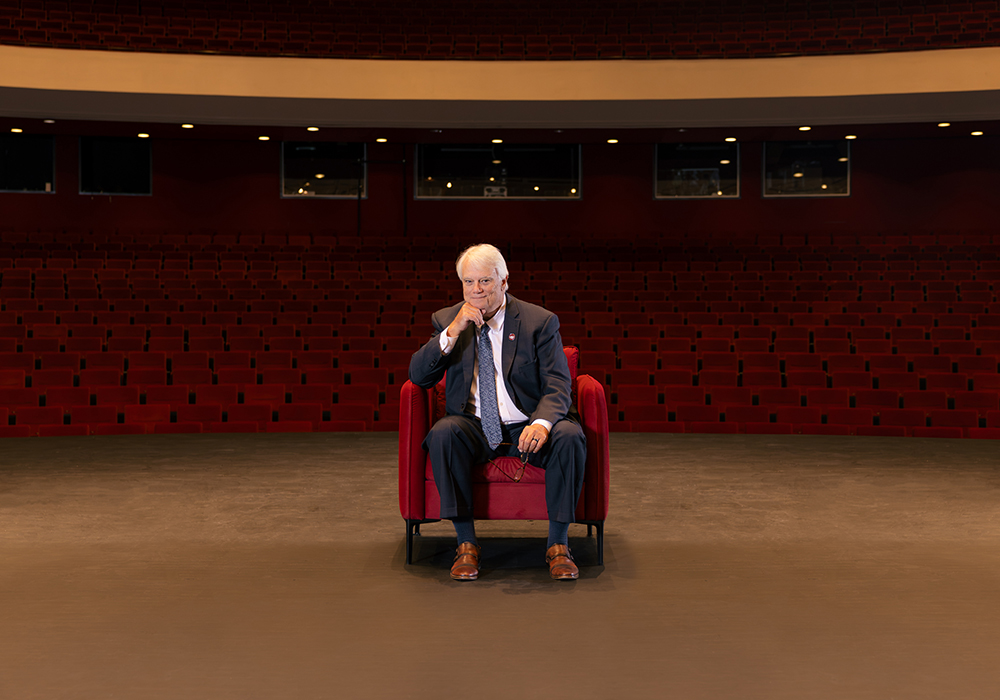
Tayloe Harding
Honorary Life Membership Award
Dean, School of Music
Tayloe Harding came to USC in 2005 with a vision. The newly hired School of Music dean knew that plenty of schools could produce great musicians. USC needed to distinguish itself by building a culture centered on music leadership.
A composer at heart, Harding understands the thrill of turning concepts into reality. That thrill has driven initiatives like Spark: Music Leadership at Carolina, which helps students explore entrepreneurship, community engagement and music advocacy, as well as Music for the Common Good, a public music effort that underpins the school’s community programming and educational offerings.
Now the longest-serving dean on campus, he has also held interim appointments as Honors College dean, College of Social Work dean and provost. Beyond USC, Harding has led numerous national music organizations.
Though he isn’t a USC alumnus, his commitment to the Gamecock family reverberates far and wide with each concert hosted in the Koger Center for the Arts, which came under the school’s management in 2018. It resonates within the halls of the Pastides Alumni Center, where his family donated his late mother’s piano. Most of all, it endures through his leadership’s lasting impact.
“What I’m most proud of,” he says, “is making the school sustainable into an unknown future and helping every person who has any interest in music, vocational or otherwise, be as musical as they can be and influencing others through the power of music to be happier, healthier, safer, more hopeful and more fulfilled.”
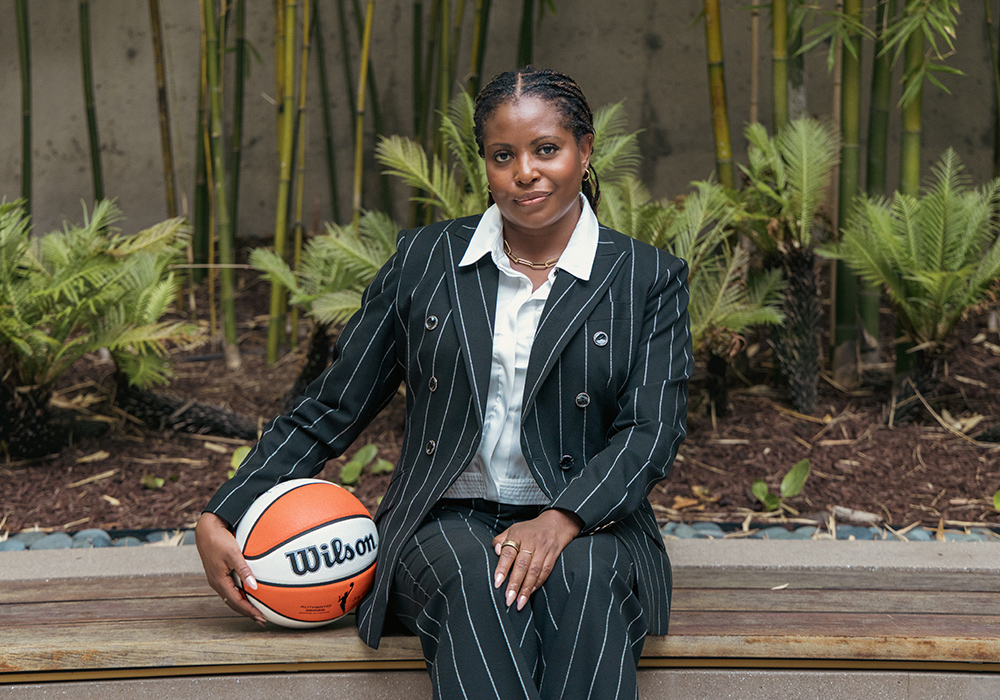
Jade Li-English
Outstanding Black Alumni Award
’03 journalism and mass communications
Growing up, Jade-Li English had ties to USC. She went to high school in Columbia, and her father was Gamecocks basketball legend Alex English, but she blazed her own trail at USC as a student-athlete and a journalism and mass communications major.
While being a student-athlete is demanding, English made the most of her time in college, and she encourages all USC students to do the same: “Explore various fields within your area of interest, and immerse yourself in campus life,” she says. “It’s never too late to pivot, so take advantage of the opportunities USC provides.”
English knows firsthand that switching gears can lead to big gains. She moved to Los Angeles after graduation to pursue acting and modeling and had some success, but later moved back across the country to work in New York for Roc Nation, first as a receptionist — “You’ve got to get your foot in the door somehow,” she says — before moving to the communications department to work directly with artists and athletes.
It was there that she found her groove: working with athletes, particularly basketball players, and ensuring they have comprehensive support both on and off the court.
Now back in L.A. and head of Klutch Sports Group’s women’s basketball division, English is at the forefront of both women’s sports and NIL, representing players from high school to college to the top of the WNBA (former Gamecock standout and five-time WNBA MVP A’ja Wilson was her first client).
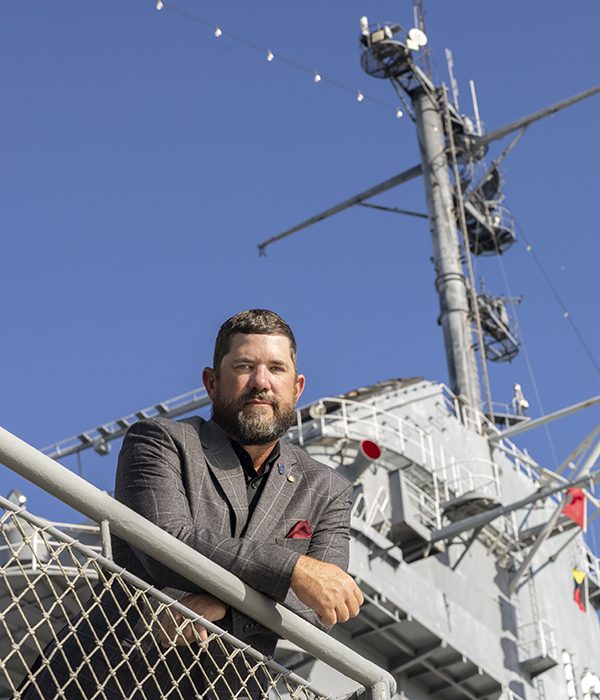
James W. “Jay” Alverson Jr.
Outstanding Veteran Alumni Award
’98 speech communications
When Jay Alverson was at USC, he majored in speech communications (now called theatre, speech and dance). And the founding director of the South Carolina Military Hall of Fame certainly used his education during his career in military intelligence.
But one of the best things USC gave Alverson was an open mind.
Following the Sept. 11 terrorist attacks, Alverson was part of an elite special operations group that entered Afghanistan from Uzbekistan to gather intelligence about the terrain and look for evidence of weapons caches and large-scale movements of people.
It was a world apart from Spartanburg, South Carolina, where he grew up, but USC had prepared Alverson to accept people from radically different backgrounds as equals, and even as friends.
“When I got to Afghanistan, I relied on my time at Carolina to realize that every person is an individual versus a stereotype or versus a group,” says Alverson, who now works as a Title IX investigator for Charlotte-Mecklenburg Schools. “That saved my life more than once — because of the relationships I was able to build with interpreters, with their families; when we would meet with tribal elders, being able to remember that nobody is better than me and nobody is lower than me; when I would go into a meeting, being able to show respect.”
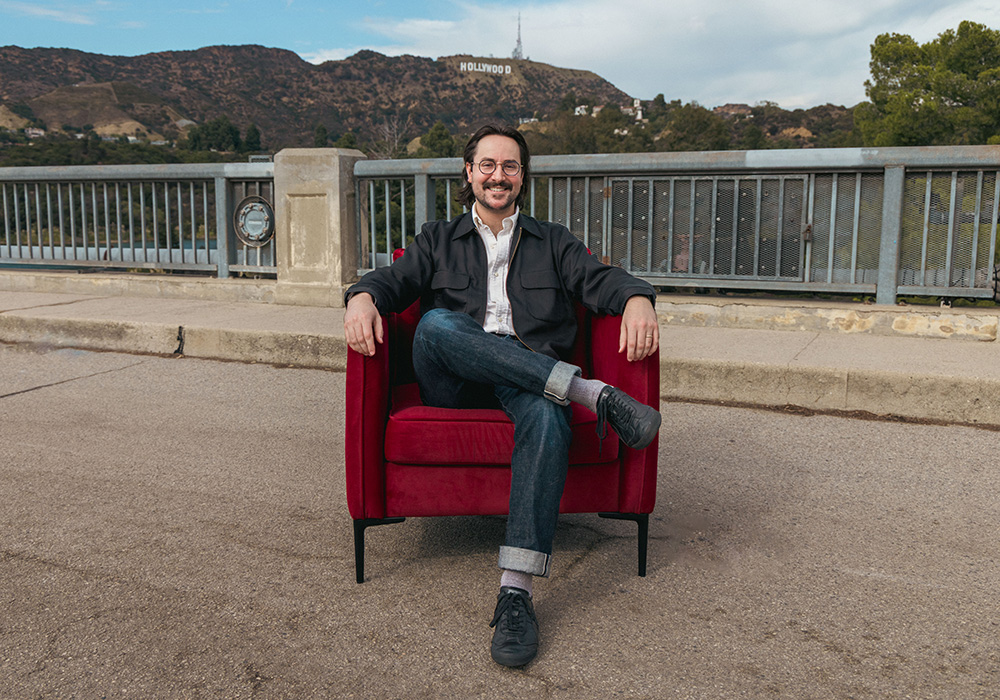
Herman Phillips
Outstanding Young Alumni Award
’18 film and media studies
Growing up, Herman Phillips loved the movies and set himself on a path to becoming a filmmaker. He attended USC as a film and media studies major and landed a production internship in Los Angeles right after his freshman year.
That summer, Phillips connected with a mentor who opened the door for him to return to L.A. and work on HBO’s Insecure. From there, more doors opened. One producer even suggested that Phillips drop out of college to work full time in L.A. But Phillips wanted to finish his degree, including a thesis for the South Carolina Honors College. That research would change his life.
Phillips had seen firsthand that the software being used almost universally across the industry was inadequate to meet the needs of major productions. He wrote his thesis examining entrenched production management software and its relationship to Hollywood’s industrial labor hierarchies, research that would later inform his approach to rethinking how production software could be built.
Two years after graduating, Phillips founded Cinapse, a software platform that assists with the complexities of production scheduling. Now Cinapse’s GM, Phillips says around 20 percent of productions globally have been made using the software since 2025.
Last year, Cinapse merged with Wrapbook, an entertainment payroll and financial technology company. Integrating the two platforms will allow productions to see in real time how scheduling changes affect budgets and costs, giving teams greater insight into how to keep projects on time and on budget.
“If we can make the best schedule and have greater visibility into all these things that are happening, we actually may be able to make more movies,” Phillips says.