First Generation

Carolina will welcome one of its largest-ever freshman classes this month, and some of them will be first-generation college students, the first in their families to pursue an education beyond high school.

President Harris Pastides can relate—he was the first in his immediate family to go to college.

“We lived in Queens and didn’t own a car—didn’t need one with the transportation system there—so my parents rented a car to take me up to Albany [State University of New York at Albany], a 155-mile drive. They brought my sister and her husband along, so there was almost no room for my luggage and tennis racket.

“My parents had never seen anyone off to college, so it was a different transition than, say, for parents whose third child was going to college. No one in the car had ever attended college—they didn’t know what to expect, and neither did I.

“They saw my dorm room and met my roommate, a young man from a rural part of upstate New York. When we had a few private moments together, they wondered aloud how the two of us would get along—me from the city and him from the country. As it turned out, Mark Romano and I became good friends: We still keep in touch all these years later.

“My most poignant memory from that day was my parents’ departure. We were all standing in front of Alden Hall, and it was a bittersweet moment. My mother was full of tears. It was a sad moment for her, but not for me. I had already begun the transition to college life and was looking forward to a party that night.”

President Pastides later earned a master’s of public health and a Ph.D. in epidemiology from Yale University in New Haven, Conn.—about 80 miles closer to home.

From the Top
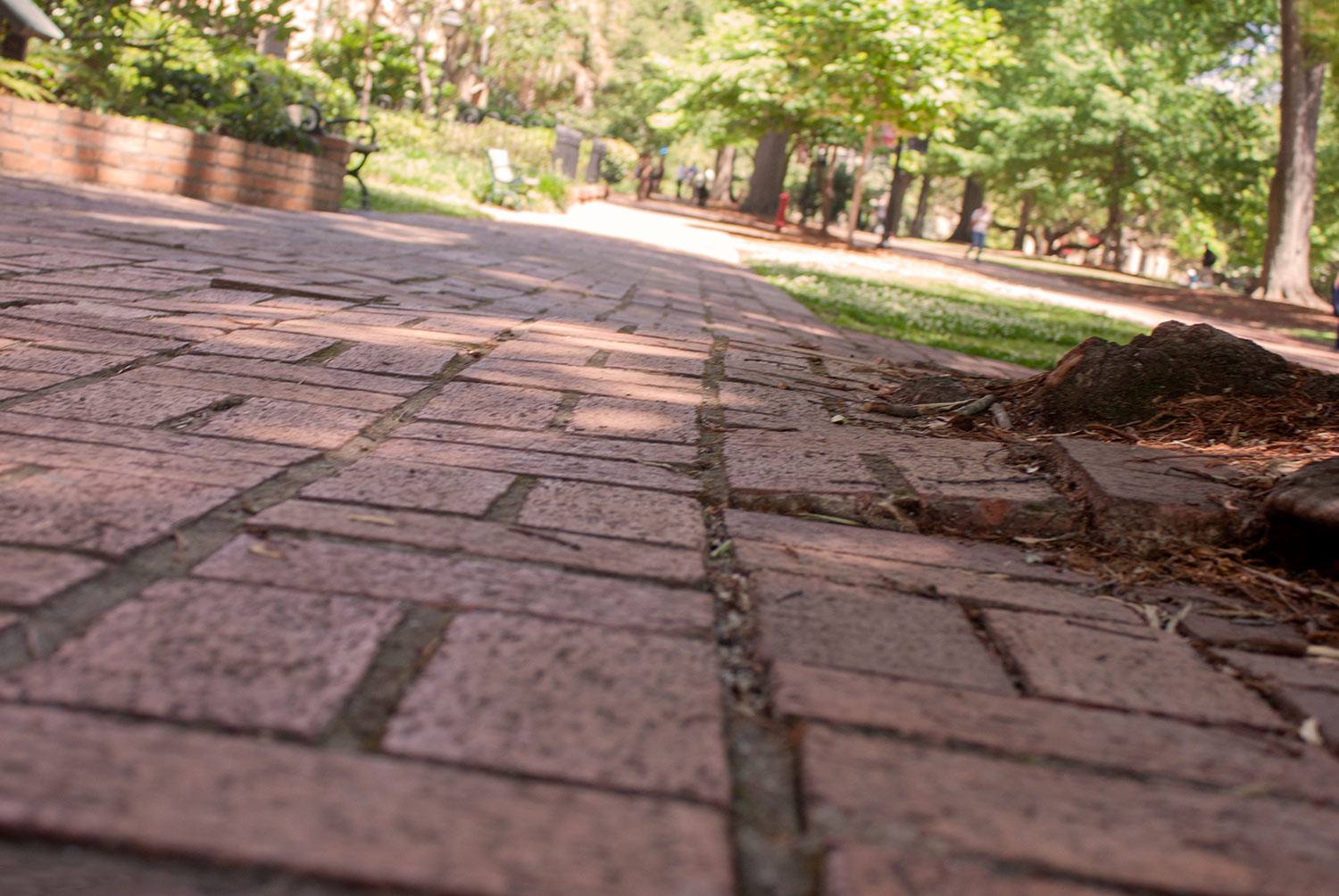
Carolina President Harris Pastides has one. So do his immediate predecessors, Andrew Sorensen and John Palms. And you can have an engraved brick paver on the Horseshoe, too. For a limited time, the Carolina Alumni Association is taking orders for personalized bricks on the historic Horseshoe’s Bicentennial Walkway. If you’re a life member of the Alumni Association, you can have a brick placed on the patio beside the Maxcy Monument. Proceeds from the brick campaign benefit scholarships. For more information about ordering, go to MyCarolina.org or call 803-777-4111.


Pastides: From the top

The University President answers yoru questions on the future of Carolina.


This year’s freshman class is going to be one of Carolina’s largest, but the University’s budget was cut by tens of millions in state appropriations last year. Given the lack of resources, how can you enroll all of those students and ensure that they’re going to get a quality education?

This has been one of the most challenging years in the University’s history; we sustained what probably was the largest proportional cut to any public university budget in the United States. And the cuts came at the same time that we set a goal to educate more South Carolinians.

We had to examine what we could do, and we decided early on that, no matter what cuts had to be made, we would not skimp on quality in the classroom. We’re not cutting back on the educational support areas—the Student Success Center, the Career Center, the Study Abroad program, and many more—that make a Carolina education special.

Instead, we’re deferring or slowing down some ambitious projects, restraining travel and hiring—and that helped us to keep this year’s tuition increase at a modest 3.6 percent, which is exactly the rate of inflation for higher education. We’ve asked our faculty to do more; some of them are teaching extra classes, and some adjuncts are doing work pro bono.

I hope this is what the people of South Carolina want us to do—demonstrating fiscal restraint while ensuring that the students they send here get a good education and a solid foundation for their futures. And we hope our efforts will be rewarded by the government in South Carolina and by our friends and donors in the years to come as the economy improves.