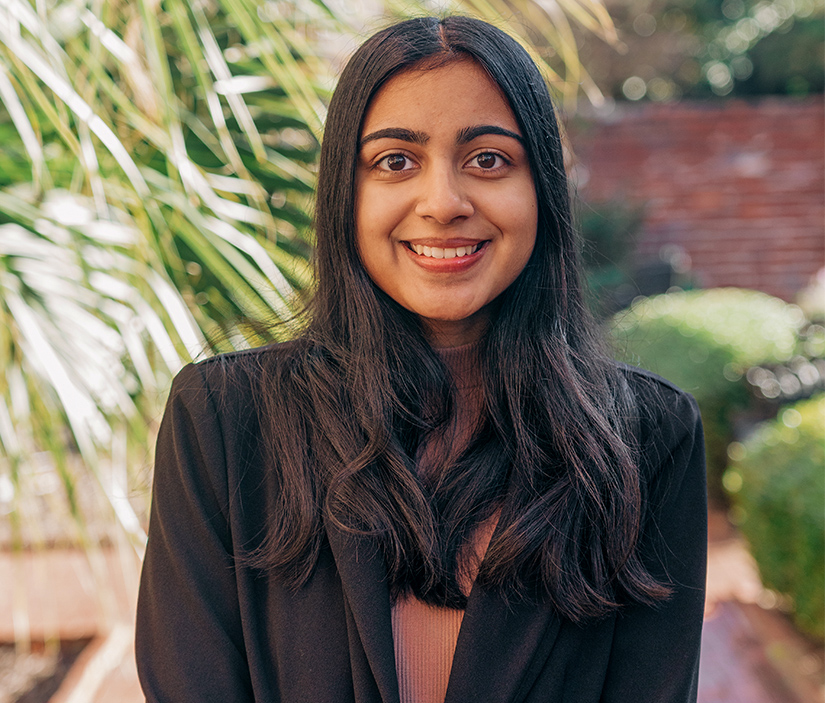
Whether she’s helping build a home in Columbia, SC, or creating germ-fighting compounds in a chemistry lab, Ria Kothari is motivated by the same question: how can this work make someone’s life better?
A junior biochemistry and molecular biology major in the McCausland College of Arts and Sciences, Kothari approaches both science and service as acts of constructing solutions that can improve lives, one molecule or one community at a time.
This semester, she began working in Chuanbing Tang’s chemistry lab, where she helps develop compounds designed to combat antibiotic-resistant pathogens.
We’re essentially creating these molecules from scratch,” she explains. “The goal is to eventually develop better therapeutics that can target harmful microbes.
Antibiotic resistance is a growing problem in hospitals, especially for surgery patients who may get infections that no longer respond to standard treatments. Kothari’s work focuses on designing new antimicrobial compounds — a kind of shield against germs — that mimic a human’s natural immune defense in order to fight the infection.
“We’re essentially creating these molecules from scratch,” she explains. “The goal is to eventually develop better therapeutics that can target harmful microbes.”
Research, she’s learned, is rarely linear. Experiments fail. Results take time. But those challenges have shaped her resilience. “If it’s not going wrong, you’re probably not doing it right,” she says. “I’ve learned not to define myself by setbacks.”
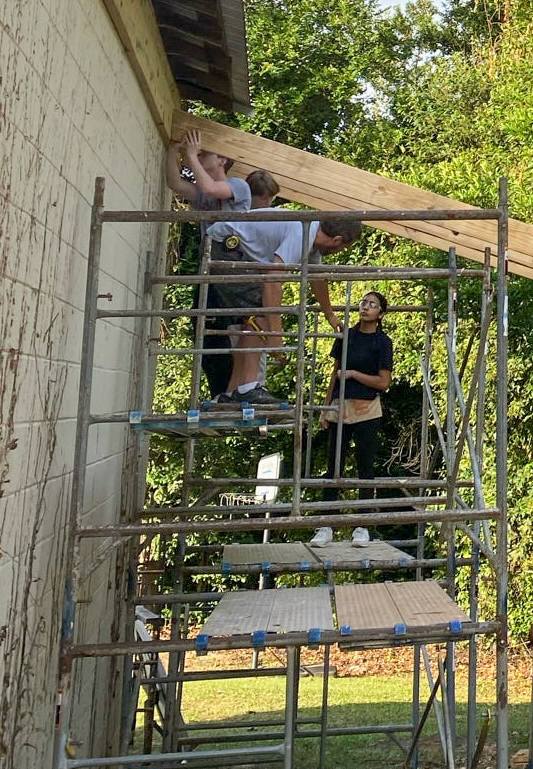
Outside the lab, Kothari channels that same determination into service. She joined Habitat for Humanity her first semester after discovering the organization at USC’s involvement fair. Her first time helping to build a home left a lasting impression, especially after meeting the homeowner and seeing her gratitude firsthand.
“That’s when it really clicked,” Kothari says. “You’re not just volunteering; you’re helping someone build a future.”
Now president of USC’s Habitat for Humanity chapter, she organizes service projects and works closely with the Midlands Habitat organization to expand opportunities for student involvement. Through Habitat, Kothari has developed leadership, teamwork and communication skills she views as essential to her future as a physician and scientist.
“In the lab, you may not see the end result right away,” she says. “With Habitat, you see it immediately. But in both cases, you know the work is going toward something meaningful.”
In her future career, Kothari plans to combine clinical care with drug discovery research. Her goal is to translate scientific breakthroughs into treatments that directly improve patient outcomes.