Summary of Article from the Columbia Star
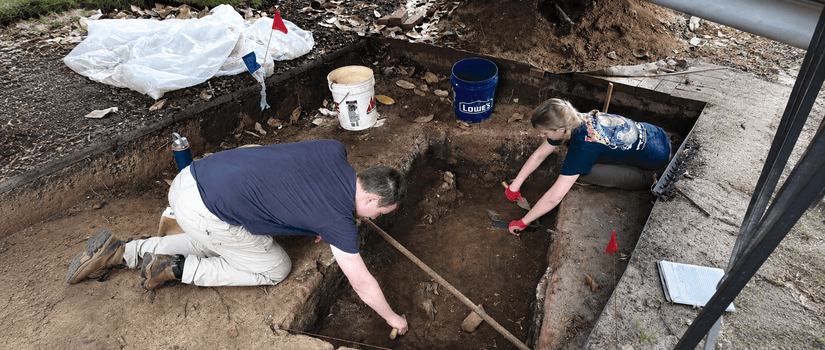
For the past three years, a quiet archaeological dig beneath the University of South Carolina's historic Horseshoe has been uncovering far more than centuries-old artifacts. Led by clinical associate professor of anthropology Kelly Goldberg, the excavation has revealed ceramic serving dishes, glass buttons, a domino piece, tools made from animal bone, children's toys, toothbrushes, and other everyday objects dating back to the 19th century. Together, these discoveries are helping researchers reconstruct chapters of USC's history that were never documented in written records.
Goldberg's journey into archaeology began as a history student at Hofstra University, where an excavation during spring break sparked a lifelong passion for uncovering history through hands-on research. After participating in archaeological projects in Iceland, she found an even greater calling in teaching, eventually bringing that passion to the University of South Carolina. Today, she combines fieldwork with experiential learning, giving students the opportunity to work as archaeologists while contributing to meaningful historical research.
Using historic maps dating back to 1884, Goldberg's team identified what they believe are the remains of the kitchen that once served the university president's house. Through careful excavation techniques, students, graduate researchers, and volunteers painstakingly recover artifacts that provide clues about life on USC's campus during the early and mid-1800s.
The project's most significant goal extends beyond identifying old buildings or cataloging artifacts. Researchers hope to better understand the lives of the enslaved individuals and laborers who likely worked and lived in the service buildings surrounding the president's residence—people whose names and experiences are largely absent from the historical record. Personal items such as buttons, clasps, toothbrushes, and children's toys offer rare glimpses into their daily lives and help tell stories that have long gone untold.
The excavation has also become an invaluable educational experience. Students from USC, Midlands Technical College, and the South Carolina Institute of Archaeology and Anthropology are gaining firsthand experience while helping preserve South Carolina's history. For many, the work represents an opportunity to uncover stories that deserve to be remembered.
As Goldberg explains, archaeology is not simply about discovering old objects—it's about filling in the missing chapters of history. Through careful excavation and research, the team is ensuring that the lives of those who helped build USC's earliest campus are finally becoming part of the university's shared story.
Read the full article to learn more about the discoveries beneath the Horseshoe, the people behind the excavation, and how archaeology is reshaping our understanding of USC's past.