Department of Psychology
Faculty and Staff Directory
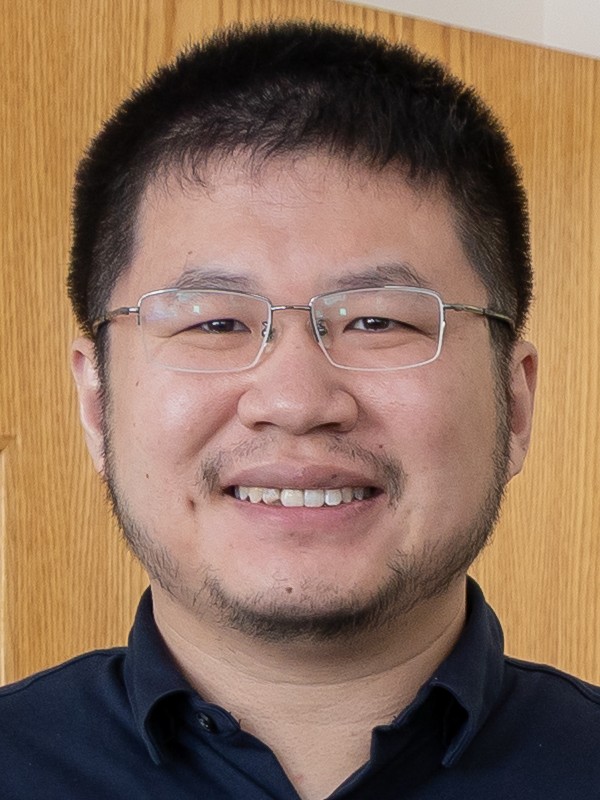
Feilong Ma
| Title: | Assistant Professor |
| Department: | Psychology McCausland College of Arts and Sciences |
| Email: | feilong@sc.edu |
| Phone: | 803-777-2591 |
| Office: | Discovery, Rm 222 |
| Resources: | Feilong Lab |
Background
Dr. Feilong Ma began his academic training at Beijing Normal University, where he worked with Dr. Jia Liu and developed an interest in brain–behavior relationships. He earned his Ph.D. in Cognitive Neuroscience from Dartmouth College under the supervision of Dr. James V. Haxby. His doctoral research focused on individual differences in the brain’s fine-grained functional architecture. He continued at Dartmouth as a postdoctoral fellow and later as a research assistant professor before joining the University of South Carolina in 2025. He collaborates with researchers within and beyond the university.
Research
In our lab, we combine computational methods with neuroimaging data to model the functional architecture of the human brain. A central challenge is that brains differ not only in size and shape but also in the locations of specific functions; the same anatomical location can serve different functions in different people. We use hyperalignment, a functional alignment method, to resolve these idiosyncrasies in functional–anatomical correspondence and establish a common representational space across individuals. This allows us to study brain organization at a fine spatial scale by examining vertex- or voxel-level patterns of activity and connectivity within regions instead of relying on the coarse regional averages used in most studies. These fine-grained measures are more reliable across independent datasets, more sensitive to experience, and twice as predictive of general intelligence as their coarse-grained counterparts.
Building on this approach, we study how fine-grained functional organization varies across individuals, how it develops, and how it relates to intelligence, personality, and disorders. We also build foundational tools for the field, including the onavg cortical surface template, which outperforms standard templates across a wide range of neuroimaging analyses. A third line of work examines how the same function is implemented across species and systems by comparing representations in human brains, monkey brains, and deep neural networks. At USC, we are extending these lines of work by using the 7T Terra.X MRI scanner to investigate the neural bases of language, aging, and clinical conditions.
More information about our research is available on the lab website (https://feilonglab.org). A full publication list can be found on Google Scholar (https://scholar.google.com/citations?user=2_X6hk8AAAAJ).
Representative Publications
Feilong, M., Jiahui, G., Gobbini, M. I., & Haxby, J. V. (2024). A cortical surface template for human neuroscience. Nature Methods, 21(9), 1736–1742. https://doi.org/10.1038/s41592-024-02346-y
Feilong, M., Nastase, S. A., Jiahui, G., Halchenko, Y. O., Gobbini, M. I., & Haxby, J. V. (2023). The individualized neural tuning model: Precise and generalizable cartography of functional architecture in individual brains. Imaging Neuroscience, 1, 1–34. https://doi.org/10.1162/imag_a_00032
Jiahui, G., Feilong, M., Visconti di Oleggio Castello, M., Nastase, S. A., Haxby, J. V., & Gobbini, M. I. (2023). Modeling naturalistic face processing in humans with deep convolutional neural networks. Proceedings of the National Academy of Sciences, 120(43), e2304085120. https://doi.org/10.1073/pnas.2304085120
Feilong, M., Guntupalli, J. S., & Haxby, J. V. (2021). The neural basis of intelligence in fine-grained cortical topographies. eLife, 10, e64058. https://doi.org/10.7554/eLife.64058
Haxby, J. V., Guntupalli, J. S., Nastase, S. A., & Feilong, M. (2020). Hyperalignment: Modeling shared information encoded in idiosyncratic cortical topographies. eLife, 9, e56601. https://doi.org/10.7554/eLife.56601