View a PDF Version of the Program Objectives, Here
Program Learning Outcomes
The primary goal of the University of South Carolina School of Medicine Columbia (USC SOMC) is to foster the next generation of exceptional physicians in South Carolina. Our strong pre-clerkship curriculum will provide the foundation for success during clinical clerkships and beyond. Medical students in our program gain valuable skills in communication, practice with standardized patients, develop clinical skills through simulation and active patient care, and explore career interests through our structured advisory processes. We are proud to be the first medical school in the country to integrate clinical ultrasound technology into all four years of our program, keeping students on the cutting edge of medical technology. A variety of electives provide students opportunities to participate in multiple clinical specialties, hands-on experiences in research, service learning, leadership, and in patient care and safety with interprofessional teams. Through strategic partnerships with hospitals in the Midlands and Florence regions, the University of South Carolina School of Medicine Columbia provides a variety of immersive clinical experiences. Whether students choose to complete their clinical training primarily in Columbia or at the Florence Regional Campus, they will graduate confident in their readiness for the next phase of their medical careers.
The “Ideal” Graduate of the USC School of Medicine Columbia
Our learners will be competent and caring professionals who are...
- Lifelong learners
- Technologically facile
- Innovative, forward thinking, pioneers
- Open-minded, adaptable communicators
- Collaborative
- Community minded (locally and globally)
… so that our graduates will be sought after for their excellence.
The University of South Carolina School of Medicine Columbia utilizes the overall program objectives to optimize the personal and professional development of our medical students as they develop their professional identity as future physicians. We see the program objectives as a framing for assessment and a tool for students to develop ownership of their learning and confidence in professional activities.
Graduates from the University of South Carolina School of Medicine Columbia meet the following core competencies:
- Health and Society: Demonstrate awareness and commitment to ensuring equitable access to high-quality care for patients, fostering a diverse and inclusive workplace for colleagues, and cultivating and sustaining relationships with suppliers and community partners to enhance a physician's understanding of the communities they serve.
1.1 Demonstrate sensitivity and responsiveness to a diverse patient population, including but not limited to diversity in age, culture, disabilities, gender, race, religion, and sexual orientation.
1.2 Show evidence of self-reflection on how personal identities, implicit & explicit biases, and lived experience may influence one’s perspectives, clinical decision-making, and practice.
1.3 Practice cultural humility and, when appropriate, provide culturally relevant recommendations and care to patients.
1.4 Explain the role of the health care system in identifying and meeting the needs of the local community (e.g., the role of the community health needs assessment or the community health improvement plan).
1.5 Differentiate between inclusive and exclusive policies and practices within local health care systems to help ensure people from a variety of backgrounds and abilities have equitable access to services and resources.
- Interpersonal and Communication Skills: Demonstrate verbal and nonverbal communication skills that promote effective exchange of information and collaboration with patients, their families, and other healthcare professionals.
2.1 Demonstrate effective communication verbally, technologically, and in writing with patients, their caretakers, colleagues, and others to exchange information for academic and clinical responsibilities.
2.2 Recognize barriers to effective communication and implement strategies to build rapport and employ active listening to overcome these barriers (e.g. – limited health literacy or utility with English language, vision or hearing impairment, other disability, or special patient characteristics such as pediatric or geriatric patients).
2.3 Provide clear, concise, oral presentation and written documentation of a history and physical exam, with basic elements of assessment and plan, that addresses the psychosocial and biomedical needs of a patient for a focused and complete patient encounter.
2.4 Present written and oral clinical and scientific data, analyses, and results clearly and concisely for the purpose of knowledge sharing with professional colleagues.
2.5 Demonstrate sensitivity, honesty, and compassion in difficult conversations.
- Medical Knowledge: Master a foundation of scientific and clinical knowledge and apply that knowledge to clinical practice.
3.1 Demonstrate knowledge of clinically relevant normal and abnormal structure and function of the human body and its component organ systems at the macroscopic, microscopic, and molecular levels.
3.2 Identify the pathology and pathophysiology of acute and chronic diseases and correlate them with clinical signs and symptoms.
3.3 Apply preventive medicine and currently available evidence-based guidelines for health promotion and disease screening.
3.4 Across the lifespan, differentiate between typical and atypical development and age- related changes.
3.5 Demonstrate comprehension of risks and benefits of clinical interventions and agents, including but not limited to pharmaceutical, surgical, genetic, complementary, nutritional, and rehabilitative therapies.
- Patient Care: Provide patient care that is compassionate, appropriate, and effective for the promotion of health and the treatment of health problems.
4.1 Gather pertinent and accurate information about patients and their conditions through thorough history-taking, physical examination, laboratory data, imaging, and other tests.
4.2 Identify patient health issues and formulate differential diagnoses from evidence gathered, including current literature and recommended practice.
4.3 Incorporate individual patients’ or designated decisionmakers’ perspectives into plans for diagnosis and treatment to provide patient-centered care.
4.4 Prioritize responsibilities to provide care that is safe, timely, effective, and efficient.
- Practice-Based Learning and Improvement: Investigate and evaluate the care of patients, appraise, and assimilate scientific evidence, and continuously improve patient care based on constant self-evaluation and life-long learning.
5.1 Seek out and incorporate feedback into personal and professional development.
5.2 Engage in continuous self-assessment to identify deficiencies in core professional attributes, knowledge, or skills.
5.3 Perform learning activities to address gaps in competence.
- Professionalism: Demonstrate a commitment to carrying out professional responsibilities and an adherence to ethical principles.
6.1 Demonstrate a commitment to ethical principles regarding care and practice, including adherence to patient confidentiality and autonomy.
6.2 Demonstrate integrity, respect, and timeliness in professional interactions in clinical and learner settings.
6.3 Identify threats to medical professionalism posed by the conflicts of interest inherent in various financial and organizational arrangements for medical practice.
6.4 Exhibit an ethical and professional standard worthy of a future physician when using social media and other forms of technology in one's personal and professional life.
- Systems-Based Practice: Demonstrate an awareness of and responsiveness to the larger context and system of health care, as well as the ability to call effectively on other resources in the system to provide optimal health care.
7.1 Work effectively in various healthcare delivery settings, systems, and teams.
7.2 Coordinate patient care within the health care system.
7.3 Incorporate considerations of cost awareness and risk/benefit analysis in patient care.
7.4 Identify opportunities to advocate for quality patient care and optimal patient care systems.
7.5 Work in interprofessional teams to enhance patient safety and quality of patient care.
7.6 Participate in system improvement (i.e., identifying errors, assessing causes, and implementing solutions).
Approved: November 2022
For a complete listing of our MD program policies click HERE
Reporting Mistreatment
If you would like to report student mistreatment, please complete the SAFE (Supporting A Fair Environment) Form.
Please note that SAFE reports will be sent to Eric R. Williams, M.D., Assistant Dean for Student Affairs (eric.williams@uscmed.sc.edu, office: 803-216-3616, cell: 803-727-9788).
Dr. Williams is a mandated reporter and is required to inform the Office for the Prevention of Harassment and Discrimination if he becomes aware that a student (undergraduate, graduate, or professional) may have experienced conduct prohibited by the USC Sexual Violence and Sexual Harassment Policy or the USC Nondiscrimination Policy Statement, even if it is reported anonymously.
Students, faculty and staff may view the new SOMC Student Mistreatment Policy.
The educational program in the School of Medicine has been developed to support and encourage the collegiality and professionalism essential to an effective learning environment. Students who believe that they have been punitively assessed or mistreated because of religion, race, ethnicity, gender, sexual orientation, age or other factors have access to the School of Medicine ombudspersons.
The ombudspersons are empowered to receive and investigate reports of mistreatment, to mediate between the parties involved, and, in the event mediation is not successful, to make recommendations directly to the dean of the School of Medicine regarding appropriate resolution of any complaints.
The use of the ombudspersons’ services to resolve a complaint represents a form of alternate dispute resolution. For this reason, the services of the ombudspersons will no longer be available to a student once that student engages an attorney to initiate legal action against the School of Medicine, the University of South Carolina, or the employees of those institutions.
M-I and M-II Students
Jay Potts, Ph.D.
Department of Cell Biology and Anatomy
School of Medicine
Email: Jay.Potts@uscmed.sc.edu
Phone: 803-216-3820
M-III and M-IV Students
Jeanette Epstein, M.D.
Department of Pediatrics
14 Medical Park, Suite 400
Email: Jeanette.Epstein@prismahealth.org
Phone: 803-479-1999
Florence Regional Campus Students
Brittany Rainwater, Psy.D.
McLeod Family Medicine Center
Email: Brittany.Rainwater@mcleodhealth.org
Phone: 843-777-2826
As your PALs (Peer Advocate Liaisons), we hope to provide you with access to the resources you need if an incident of mistreatment occurs. We hope to foster an environment of confidentiality in order to protect students disclosing any issues with mistreatment. Reporting issues of mistreatment will not only help to protect you, but also your peers and future medical students.
M4 PALs
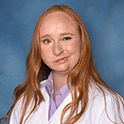 |
Amber Dorn, ColumbiaAmber.Dorn@uscmed.sc.edu |
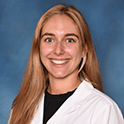 |
Brynn Franz, ColumbiaBrynn.Franz@uscmed.sc.edu |
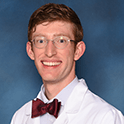 |
Hansel Haase, FlorenceHansel.Haase@uscmed.sc.edu |
M3 PALs
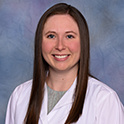 |
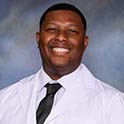
Elizabeth Barker, ColumbiaElizabeth.Barker@uscmed.sc.edu |
 |
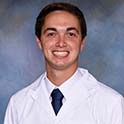
Daniel Hernandez, ColumbiaDaniel.Hernandez@uscmed.sc.edu |
 |
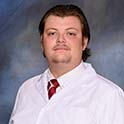
Graham Tulowitzky, ColumbiaGraham.Tulowitzky@uscmed.sc.edu |
 |
Benjamin Williams, FlorenceBenjamin.Williams@uscmed.sc.edu |
Learn about our technical standards, HERE.